blog-post // Jun 12, 2026
Heelflip Learning Time: Why It Usually Takes Longer Than Kickflip
Kickflip: 1-6 months. Heelflip: 1-4 months. Yet heelflip costs more practice hours for most skaters. Here is why kick direction and foot anatomy are to blame.
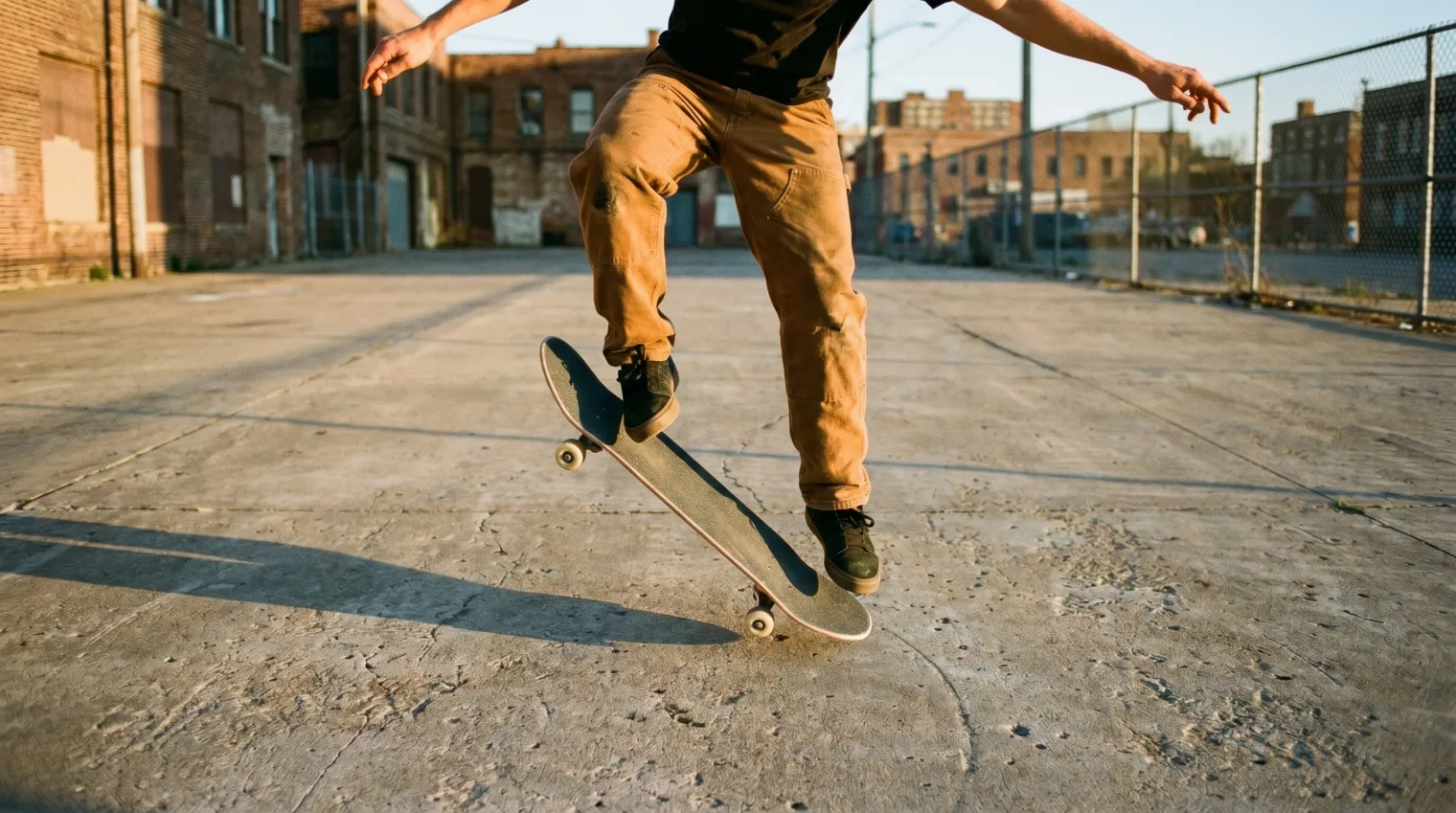
Onbolts puts the heelflip at 1-4 months and the kickflip at 1-6 months. On paper, heelflip looks faster. In practice, most skaters spend more total hours on heelflip before landing it consistently. This article explains why and what you can do about it.
The Raw Numbers
Here are the two tricks side by side, using Onbolts learning data and a baseline of 3 sessions per week at 75 minutes each:
| Trick | Onbolts Estimate | Practice Hours (low) | Practice Hours (high) |
|---|---|---|---|
| Kickflip | 1-6 months | ~16 hrs | ~92 hrs |
| Heelflip | 1-4 months | ~16 hrs | ~61 hrs |
The heelflip range ends sooner at the top, but that does not mean it is easier. The reason the heelflip's maximum is lower is simpler: most skaters learn kickflip first. By the time they attempt heelflip, they already have solid board control, a reliable pop, and an understanding of how flip timing works. They are not starting from zero. So the heelflip gets a head start.
When you factor in the total hours spent skating before attempting heelflip, the heelflip usually costs more practice time than the kickflip did at the equivalent stage.
Why the Flick Direction Is the Core Problem
The kickflip and heelflip look like mirror images. They are not.
On a kickflip, your front foot flicks down and inward toward your heelside rail, then off the nose. The motion keeps your front foot close to the board and follows a natural arc for most skaters. The board rotates toward you, under your back foot, and you can keep visual contact with the grip tape throughout the flip.
On a heelflip, your front foot kicks outward and forward, with the heel catching the nose edge. The motion opens your front hip and shoulder. The board rotates away from you. You lose visual contact with the grip tape during the flip. Your front foot has to travel further out to initiate the spin, which is why the most common heelflip error is the board shooting out in front of you.
Think of it this way: kickflip brings the board to you. Heelflip sends you after the board.
What the Real Heelflip Mistakes Tell You
The Onbolts heelflip page tracks two primary mistakes, both of which point to the same root cause.
Mistake 1: Front foot lands behind the board. Your front foot ends up way behind where it should be. Cause: kicking the board too far forward. The fix is to keep your front knee bent during the kick, which shortens the arc and keeps the board from escaping. This mistake does not have a kickflip equivalent because the kickflip flick naturally keeps the foot closer to the board.
Mistake 2: Board shoots forward. The board flies out in front of you. Cause: the kick travels forward instead of outward. The fix is to focus on the lateral component of the kick, brushing outward instead of pushing forward. Again, this is a direction-of-force mistake with no direct kickflip parallel.
Both mistakes come from the same place: the outward kick direction is unintuitive. Your nervous system wants to push forward. Teaching it to kick outward takes repetitions, and that repetition cost is why heelflip takes more total time despite the shorter calendar estimate.
The Front Shoulder Problem
Step 3 in the Onbolts heelflip sequence flags something most tutorials skip: your front shoulder opens up during the kick. When your front shoulder rotates open, two things happen. First, your weight shifts off the board. Second, the board has no "ceiling" to flip into, so it rides out forward and does not come back under your feet.
On a kickflip, your shoulders stay roughly square because the flick goes inward. On a heelflip, keeping your shoulders square is an active correction, not a default. You have to consciously keep that front shoulder closed while your front foot kicks outward. That is a coordination task with two competing directions, and it takes time to automate.
Heelflips Complete Faster Than Kickflips
There is one physical advantage to the heelflip that the Onbolts step notes capture: heelflips often complete their rotation faster than kickflips. The outward kick generates a quicker spin because it catches the edge of the deck farther from the center. This means you need to be ready to catch earlier.
For many skaters, this speed catches them off guard and they miss the catch. Once you adjust for the faster rotation, it becomes an advantage: the board is under you sooner, leaving more time to set your feet before landing.
The Sequencing Question: When Should You Start Heelflip Training?
The practical answer is: when your kickflip is at least at "occasional" status on the Onbolts scale, meaning you land it most of the time but not fully consistently.
Here is why that threshold matters. Heelflip uses the same mental model as kickflip: pop with the back foot, flip with the front foot, catch with both. If kickflip is not yet wired, starting heelflip will create confusion between the two flick directions. You will mix them up mid-session and neither will feel clean.
Once kickflip is at occasional or consistent, your brain has the flip model. You can then add the heelflip as a variation, and the comparison between the two actually helps you understand both better.
Parallel Training: Why Some Skaters Learn Both at Once
A subset of skaters do train kickflip and heelflip in parallel, and it works for some of them. The logic is that practising both clarifies the difference in flick direction rather than creating confusion. If you are the kind of skater who learns better by contrast ("heelflip goes this way, kickflip goes that way"), parallel training can shorten the total time.
The risk is that early in the learning process, mixing the two delays both. If after two weeks of parallel training neither trick is showing clear progress, go back to kickflip only until it is at landed-once status, then reintroduce heelflip.
What Comes After Heelflip
Once your heelflip is consistent, you have two clear directions in the Onbolts skill tree. The varial heelflip adds a backside pop shove-it to the heelflip spin (Onbolts estimate: 2-5 months). It is the natural next step because you already own the heelflip component and only need to learn to combine it with a rotation you likely already have from your pop shove-it.
The other path is to deepen your kickflip first, working toward the tre flip (6-18 months). The tre flip is a kickflip combined with a 360-degree backside rotation, and it is one of the most recognizable advanced tricks in street skating. Most skaters pursue both paths at the same time, alternating heelflip sessions with kickflip-to-tre-flip progression work.
The Honest Summary
Heelflip takes longer than kickflip in total practice hours for one reason: the outward kick direction is against your body's default movement patterns. The board-shooting-forward problem is harder to fix than the kickflip's board-shooting-sideways problem. Your front shoulder opens when it should stay square. The board completes its rotation faster than you expect.
None of this makes heelflip impossible. It makes it a specific coordination challenge that responds well to deliberate practice: isolate the outward kick on flat ground without even flipping the board, rebuild the muscle memory, then add the pop. Most skaters who stall on heelflip for weeks are fixing the wrong thing. They are trying harder instead of practising the kick direction differently.
Use the full steps and mistake breakdowns on the Onbolts heelflip page to diagnose exactly where your attempt breaks down.
Frequently asked
- How long does a heelflip take to learn?
- Onbolts data puts the heelflip at 1-4 months of calendar practice at 3 sessions per week. In practice hours, that is roughly 16-61 hours. Most skaters need a solid kickflip before they make real progress on heelflip, so the practical starting point is later in your progression than the calendar range suggests.
- Is heelflip harder than kickflip?
- For most skaters, yes. The heelflip kick goes outward and forward, which opens your front shoulder and sends the board away from you. Kickflip flicks inward and down, keeping the board closer to your body. The board-running-away problem on heelflips is harder to fix than the common kickflip mistake of scooping instead of flicking.
- Why does the board shoot forward on a heelflip?
- This is the most common heelflip mistake in the Onbolts database: the kick travels too far forward instead of outward. The fix is to focus on the lateral (sideways) component of the kick. Imagine brushing the nose edge outward rather than pushing it forward. Keeping your front knee bent during the kick shortens the arc and keeps the board under you.
- Should I learn kickflip before heelflip?
- Yes. Kickflip teaches you the general mechanic of flipping the board with your front foot while keeping your back foot in place. Heelflip uses the same structure but in the opposite direction. Trying to learn both at the same time creates confusion about which flick goes where. Land kickflip to at least occasional status before starting heelflip.
- What tricks should I learn after heelflip?
- The natural progression after heelflip is the varial heelflip (2-5 months by Onbolts data), which adds a backside pop shove-it to the heelflip. Many skaters also alternate between heelflip and varial kickflip training at this stage, since both sit at the intermediate level and share similar flip-plus-spin mechanics.