blog-post // Jul 12, 2026
Heelflip vs Kickflip: Why One Feels Harder Depending on Your Style
Kickflip runs 1-6 months and heelflip 1-4 months in Onbolts' learning data, but which feels harder depends on your stance and which foot leads naturally.
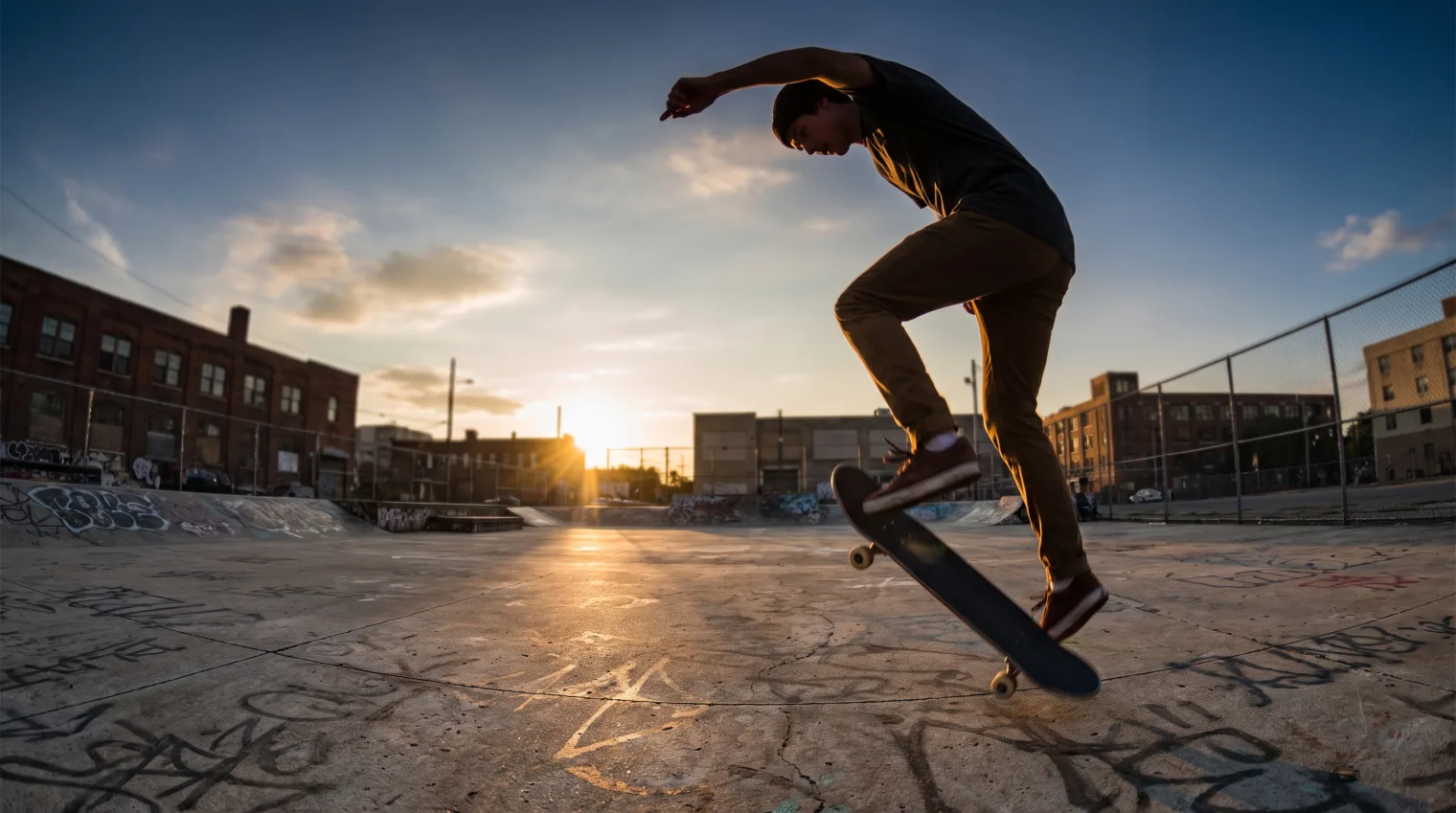
Onbolts' learning data puts the heelflip at 1 to 4 months and the kickflip at 1 to 6 months, which makes heelflip the faster average trick, but "average" hides a real split: plenty of skaters find the heelflip noticeably harder, and it usually comes down to which foot naturally wants to lead the flick. Neither trick requires the other. Both only need a solid ollie to start.
The mechanical difference, in plain terms
A kickflip flips the board by dragging your front foot off the toe-side edge, rotating the board away from your body. A heelflip does the mirror version: your front foot drags off the heel-side edge, rotating the board toward your body. Same rotation speed, same general pop, opposite direction and opposite part of your foot doing the work.
That sounds like it should make them equally hard. In practice it doesn't, because most people's feet aren't symmetrical in how they move. Try this test: stand on flat ground (off the board) and slowly mimic each flick motion without weight on it. Most riders notice one side feels more controlled immediately. That's usually a preview of which trick will click faster.
Why heelflip trends faster in the data, but not for everyone
A few reasons show up in why heelflip skews slightly faster on average:
- Heel contact is a bigger, flatter surface, which some riders find easier to control than the toe-drag in a kickflip.
- The rotation direction (toward the body) matches the natural catch stance for a lot of skaters, meaning the board comes back under their feet in a way that feels more intuitive.
- Kickflip gets attempted first more often, since it's the more commonly referenced trick, so some of the kickflip timeline in the data includes riders who are also still solidifying general flip-trick fundamentals for the first time.
That last point matters. If heelflip is your second flip trick rather than your first, you're not starting from zero. You already know what a clean pop-flick-catch sequence feels like, so a lot of the learning curve is just adapting the motion, not building it from scratch.
When kickflip is actually the harder one for you
Some riders genuinely struggle more with heelflip. The tell is usually a board that spins sideways instead of flipping cleanly (see the FAQ on crooked heelflips below), or a catch that feels late no matter how much they slow down. If that's you after a real number of attempts, don't force it. Switch to focusing on kickflip for a session or two. There's no penalty on the Onbolts tree for learning them out of order since neither is a prerequisite for the other.
Balance and weight distribution differ subtly between the two
Beyond the flick itself, riders often notice their weight naturally sits slightly differently on a heelflip attempt versus a kickflip attempt. Because the heelflip's rotation pulls the board back toward you, leaning too far forward on takeoff tends to throw the catch off in a way that doesn't happen as often on a kickflip, where the board is already rotating away from your body. If your heelflips keep coming up short or catching late, check whether you're carrying your weight too far forward through the pop, since that's a mistake specific to this trick's rotation direction rather than a general flip-trick problem.
A quick diagnostic if you're stuck on either
Whichever one is giving you trouble, run through this in order:
- Is your ollie still solid without thinking about it? If your pop height dropped since you started flip tricks, go back and clean that up first.
- Is the flick a drag or a kick? Both tricks need a drag, not a kick. A kicking motion sends the board spinning past a clean rotation.
- Are you catching too early? Same issue as most flip tricks: watch the board complete its rotation before committing your feet.
- Is your back foot popping symmetrically? An off-center pop adds unwanted spin that compounds whatever direction the flick is already sending the board.
What riders report anecdotally versus what the data shows
It's worth being honest about a mismatch here. Ask any group of skaters which trick is harder and you'll get a near-even split of strong opinions in both directions, often argued with real conviction. Onbolts' aggregate learning-time data leans toward heelflip being faster on average, but individual timelines vary widely enough that the aggregate number is more useful as a general expectation than a prediction for your specific case. If you're three weeks into heelflip attempts with no progress while your friend landed theirs in two, that's not necessarily a sign you're doing something wrong. It might just mean your particular feet favor the kickflip motion instead.
Board setup and stance width can tilt the comparison
A wider stance than you'd use for an ollie tends to make the heelflip's toward-the-body rotation feel more cramped, while a stance that's too narrow can make the kickflip's away-from-the-body rotation feel unstable on landing. If you've never experimented with small stance adjustments specifically for flip tricks, rather than just using whatever stance feels comfortable for cruising, it's worth testing a slightly different foot spacing for each trick individually. This is a minor factor compared to the flick mechanics themselves, but for riders stuck right at the edge of landing either trick, a half-inch stance change has occasionally been the difference that unlocks consistency.
What to do if you're equally bad at both
Some riders don't have a clear preference either way after a fair number of attempts at each. If that's you, the practical move is to just pick one and commit to a real block of dedicated practice, two or three sessions minimum, before evaluating again. Trying to split attention evenly between two tricks you're equally unfamiliar with tends to produce slower progress on both than fully committing to one first. There's no wrong choice here since neither trick depends on the other, so the decision matters less than the commitment to actually finishing one before starting the next.
Don't split practice time too early
It's tempting to work on both tricks in the same session once you've got the basic motion of each. Onbolts' progress data generally shows faster overall gains when riders get one flip trick to "consistent" on the 5-level scale (learning, landed once, occasional, consistent, mastered) before adding the second one into rotation. Muscle memory for opposite-direction flicks can bleed into each other if you're building both from a beginner level at the same time, which slows both down.
If you do want to work on both, a reasonable middle ground is dedicating separate sessions to each rather than switching back and forth attempt by attempt within the same session. Full sessions let your feet settle into one motion pattern at a time, which tends to produce cleaner reps than constant switching.
What both tricks unlock next
Once kickflip and heelflip are both consistent, the skill tree opens up rotation variants that combine flip and spin: the varial kickflip (which needs pop shove-it and kickflip as prerequisites) and the varial heelflip (which needs heelflip and frontside shove-it). Whichever flip trick you land first effectively decides which varial you can start working toward sooner. This is one of the clearer examples on the tree of how an early trick choice quietly shapes what's convenient to learn next, even without a formal prerequisite forcing the order.
A note on switch and nollie flip tricks
Everything above assumes regular-stance attempts. If you're also curious about switch or nollie versions down the line, know that the "which is harder" split often flips (no pun intended) once you're riding switch, since your leading foot changes. A rider who found heelflip easier in their normal stance may find kickflip easier in switch, simply because the mechanics that felt natural on one side don't automatically transfer to the mirrored stance. That's a much later consideration, but worth knowing so you don't assume your stance-specific preference is a fixed trait rather than something tied to which foot is doing the work.
Track both on the same scale, honestly
It's easy to round up mentally: "I landed a heelflip once, I've got it." The Onbolts 5-level scale exists specifically to keep that honest, separating a one-off landing from something you can do on command. Log both tricks separately on your progress page rather than letting one "I did it once" clip stand in for real consistency.
For a full breakdown of everything else that branches off flatground flip tricks, the tricks list is the fastest way to see where kickflip and heelflip sit relative to what comes next, and the video library has tutorials for both if you want to see the flick motion frame by frame before your next session.
Frequently asked
- Is heelflip easier than kickflip?
- According to Onbolts' learning data, the heelflip's typical range is 1-4 months compared to the kickflip's 1-6 months, so on paper the heelflip trends slightly faster for most riders. But this varies a lot person to person: some skaters find the heel-drag motion more natural than the toe-drag flick, and for them heelflip is genuinely the easier trick to isolate.
- Do heelflip and kickflip have the same prerequisite?
- Yes. Both tricks only require the ollie on the Onbolts skill tree. Neither one requires the other, so you can technically learn them in any order or even work on both in parallel, though most riders find it easier to get one fully consistent before splitting attention.
- Why does my heelflip go crooked or spin sideways?
- This is usually a symptom of your heel dragging off-center rather than straight down the edge of the board, which turns the flip into a scoop and adds unwanted rotation. Check that your heel is contacting the board near the middle of the deck's width, not toward the nose or tail, and that the drag motion is straight rather than angled.
- Which trick should I learn first if I'm goofy footed?
- Stance doesn't change which trick is easier; kickflip and heelflip work the same way for regular and goofy riders, just mirrored. What matters more is which foot naturally leads your flicking motion when you're not thinking about it, which you can test by trying a slow, static flick of each type while standing still on the board before committing to a session on either.
- What comes after landing both kickflip and heelflip?
- Once both are consistent, the natural next step on the Onbolts tree is combining flip and rotation: the varial kickflip and varial heelflip. The varial kickflip requires both pop shove-it and kickflip, and the varial heelflip requires both heelflip and frontside shove-it, so those variants directly build on whichever flip trick you land first.
- Can I learn heelflip and kickflip at the same time?
- You can, since neither depends on the other, but Onbolts' progress data generally favors getting one to 'consistent' on the 5-level scale before splitting practice time. Muscle memory for the two flicks can blur together if you're a true beginner to both, which slows both down rather than speeding either up.