blog-post // Jun 16, 2026
Stuck on the Same Tricks for Months: How to Break a Skate Plateau
Skating the same tricks for months usually means one of three things. Here is the honest breakdown of why skate plateaus happen and how to fix each one.
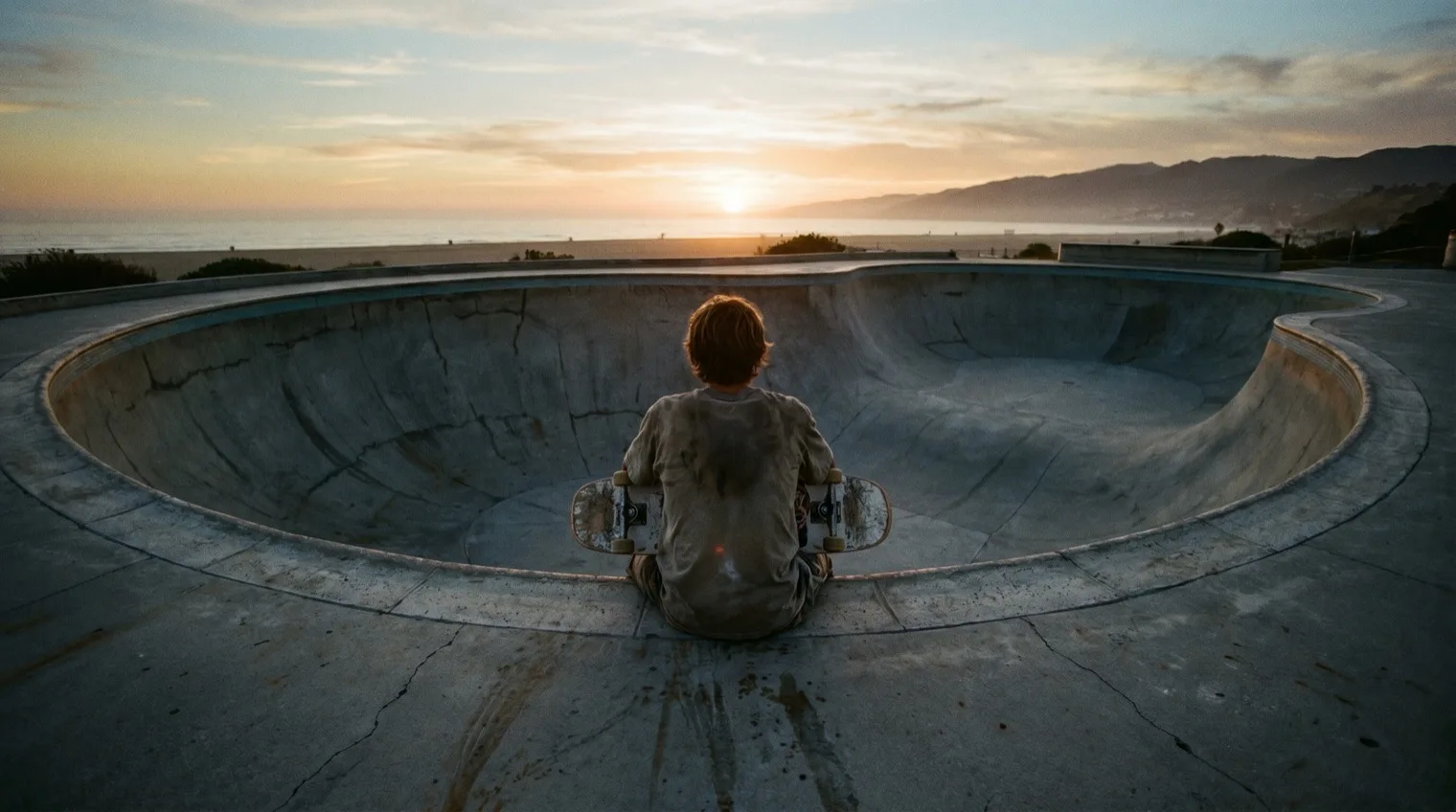
A skate plateau is not a sign you have hit your ceiling. It is almost always a sign that something structural is missing from how you are practicing. The fix is not skating more hours. It is changing what you work on and how you measure it. This article breaks down the three most common plateau causes and gives you specific tactics for each.
Why Plateaus Happen (and It Is Not What You Think)
Most skaters assume a plateau means they need more repetitions of the trick they are stuck on. Do it a thousand more times and eventually it clicks. Sometimes that works. More often it does not, and here is why.
Repetitions of a broken motion just reinforce the broken motion. If your kickflip pops and flicks at the same time instead of popping first and then flicking, ten thousand reps of that pattern will not make it consistent -- they will make it consistently wrong.
The real cause of most plateaus is one of three things: no structure (you practice randomly), skipped prerequisites (you jumped ahead in the progression), or no visible progress (you cannot see the small gains, so it feels like nothing is moving).
Plateau 1: Practicing Without Structure
Unstructured practice feels productive because you are at the skatepark and you are skating. But landing a trick you already know and then trying a trick you cannot land, then going back to the one you know, is not a training session. It is a loop.
The ollie takes 1 to 4 weeks. The kickflip takes 1 to 6 months. The varial kickflip takes 2 to 6 months. These are real time estimates from the Onbolts database, not optimistic marketing numbers. The jump from ollie to kickflip is the largest mechanical leap in beginner flatground skating. If you hit the kickflip wall at month two and have no structure, you will just repeat the same session for months four and five as well.
Structured practice means deciding before you arrive what you are working on and what "done for today" looks like. Three clean reps counts. Seven out of ten attempts landing consistently counts. "I practiced it" does not.
Plateau 2: Skipping Prerequisites
The skill tree on Onbolts is not decorative. It maps the actual mechanical dependencies between tricks. Some tricks require specific muscle memory from earlier tricks before they are physically achievable without luck.
The kickflip requires a solid ollie. Not a sometimes-ollie. A consistent ollie where you can control height, land over the bolts, and replicate it rolling. The kickflip tutorial says it directly: "the pop mechanics are identical" to an ollie. If the ollie is not locked, you are trying to add a front-foot flick on top of an already unstable base.
The frontside 180 takes 2 to 5 weeks. The backside 180 takes 2 to 5 weeks. If you are stuck on kickflips, both of these sit at a similar difficulty level and build the rotation awareness that eventually connects to tricks like kickflip backside 180. Working them is not a detour. It is filling in prerequisites you might have assumed were there.
A manual takes 2 to 6 weeks and teaches the balance and board feel that shows up in grinds, slides, and anything that requires sustained weight control. Skaters who skip manuals often hit a second wall when they try ledge tricks and cannot figure out why the board keeps slipping.
Go to the skill tree and look at the tricks one level below where you are stuck. If any of them have a gap in your progression, that is likely the bottleneck.
Plateau 3: No Way to See Progress
This is the most underrated cause of quitting. Skateboarding has no score. There is no level-up screen. If your benchmark is "can I do this trick" and the answer is still no, every session feels the same.
The 5-level skill scale exists to solve this: learning, landed once, occasional, consistent, mastered. Each level is a real milestone.
- Learning: you understand the motion but have not landed it
- Landed once: you have proven the trick is physically possible for you
- Occasional: you can land it some sessions but not every time
- Consistent: you can reliably land it when you want to
- Mastered: it is fully automatic in varying conditions
Moving from learning to landed once on a heelflip that takes 1 to 4 months is real progress. But if your only metric is "can I heelflip" and the answer is "not reliably," you will feel stuck for that entire month even as you improve.
Track sessions. Write down what you worked on and where you would rate yourself on the scale that day. You will see movement.
The Classic Plateau Points by Difficulty
Here are the three walls most skaters hit and what to do at each.
Post-ollie plateau (beginner to intermediate). You can land an ollie but flip tricks feel impossible. The ollie takes 1 to 4 weeks. The kickflip takes 1 to 6 months. That gap is normal. What breaks this plateau: drilling the pop-first sequence (stomp, then flick), going lateral to the pop shove-it (1 to 3 weeks) to learn board rotation without the flip, and rating your kickflip progress honestly on the 5-level scale rather than treating it as binary.
Kickflip plateau (intermediate). You can land kickflips occasionally but they are not reliable, and every trick that requires a kickflip feels out of reach. The varial kickflip takes 2 to 6 months on top of a reliable kickflip. The hardflip takes 4 to 12 months. You cannot shortcut through inconsistent kickflips. What breaks this plateau: film yourself in slow motion and compare your ankle exit angle to a reference. If your front foot exits downward instead of forward, no amount of extra reps will fix it without changing the motion.
Tre-flip wall (advanced). The tre flip takes 6 to 18 months. This is one of the longest learning curves in flatground skating. Skaters who hit this wall are usually fighting a scoop timing issue or not enough height from the pop. The backside shove-it rotation needs to happen clean and high before the kickflip motion is added. Treat it as two separate tricks that need to be consistent on their own before combining them.
The Lateral Progression Tactic
When a wall feels truly stuck, go sideways. Pick a trick at the same difficulty level with slightly different mechanics. A heelflip uses the same pop base as a kickflip but the front foot flicks outward with the heel instead of inward with the toe. Working it cross-trains the ankle motion and often breaks the mental loop of "I cannot kickflip."
The frontside 180 and backside 180 both sit at beginner level (2 to 5 weeks each) and teach the upper body rotation that connects to nearly every rotation trick above them. If you skipped these because they seemed boring, go back. They are prerequisites in everything but name.
What Consistent Actually Means
"Consistent" in the skill scale means you can land the trick when you decide to. Not occasionally. Not when everything goes right. It means the motion is repeatable on demand in normal conditions.
Tricks unlock their dependents in the skill tree at the consistent level, not landed once. That threshold is deliberate. A trick at occasional is not a foundation for the trick that builds on it. Consistent is.
Track It, Then Move
Before your next session, rate every trick in your current set on the 5-level scale. Write it down. At the end of the session, re-rate. You will likely find things shifted, even if it does not feel like it.
Then check the skill tree for the tricks immediately above and beside your current level. Pick one that has all its prerequisites covered. That is your session focus.
The skill tree on Onbolts maps the progression from ollie to advanced flatground so you can see exactly where you are and what comes next -- without guessing.
Frequently asked
- Why do skaters get stuck on the same tricks for months?
- The most common reasons are practicing without a structured path, skipping prerequisite tricks, and having no way to measure incremental progress. Without a clear next step, most skaters repeat the tricks they already know rather than pushing into harder ones.
- What is the post-ollie plateau and why is it so common?
- The post-ollie plateau is the period after you can land an ollie inconsistently but before any flip tricks are reliable. Kickflips take 1 to 6 months. Without context, that range feels like failure. The plateau is real but normal -- most skaters hit it because the jump in complexity between an ollie and a kickflip is the largest single step in beginner flatground skating.
- How does the 5-level skill scale help with plateaus?
- The scale (learning, landed once, occasional, consistent, mastered) gives you visible intermediate milestones. Instead of 'I still cannot kickflip,' you can say 'I moved from learning to landed once.' That shift is real progress even if the trick is not fully locked yet.
- What is lateral progression and when should I use it?
- Lateral progression means learning a trick at the same difficulty level rather than forcing through a wall. If you are stuck on kickflips, picking up a [heelflip](/tricks/heelflip) or a [frontside 180](/tricks/frontside-180) uses similar skills with slightly different mechanics. Cross-training often breaks mental blocks and improves the original trick indirectly.
- Can skipping prerequisite tricks cause a plateau?
- Yes, frequently. The skill tree exists because some tricks are mechanically required before others. Trying a varial kickflip without a reliable kickflip means you are fighting two unfamiliar motions at once. Going back and filling in prerequisites is not a step backward -- it is removing the actual obstacle.
- How do I know if my plateau is about technique or about skipping a prerequisite?
- If you can land the trick once but cannot replicate it, it is usually a technique consistency issue. If you cannot land it at all and it has been weeks, check whether the prerequisite tricks are actually consistent. An ollie that is inconsistent will make a kickflip nearly impossible to land reliably.