blog-post // Jun 15, 2026
How Many Hours Does Each Skateboard Trick Actually Take to Land
Practice-hours for 12 tricks: ollie 4-15 hrs, kickflip 16-92 hrs, tre flip 91-274 hrs. Onbolts estimates converted to hours assuming 3 sessions per week.
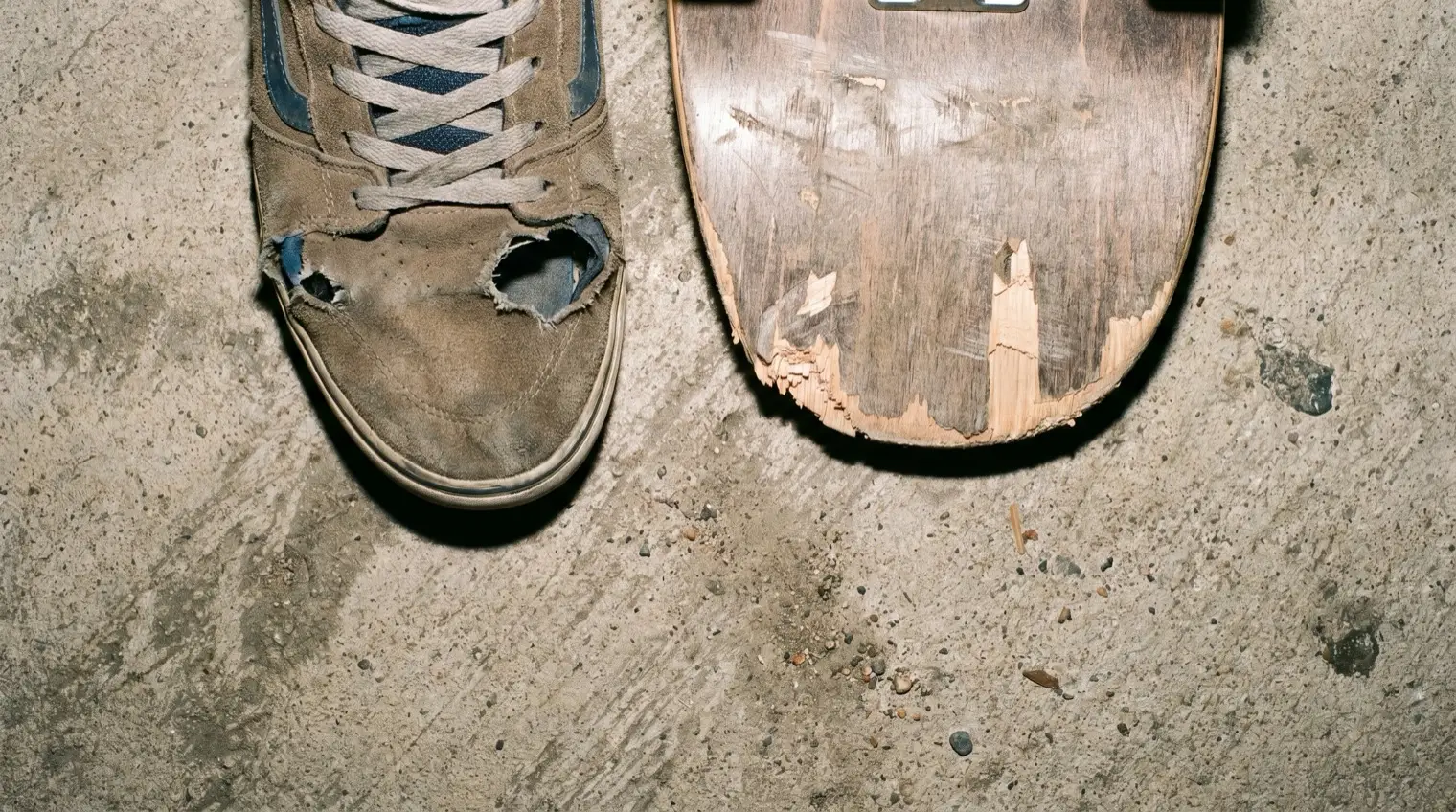
The honest answer: an ollie takes most beginners 6 to 36 hours of actual practice. A kickflip takes 55 to 270 hours. A tre flip can take 270 to over 800 hours. These are real ranges from Onbolts learning data, not YouTube hype.
This article converts those calendar-time estimates into practice hours so you can plan realistically. The math uses a simple baseline: 3 sessions per week, 60-90 minutes each (average 75 minutes), which comes out to roughly 225 minutes per week or about 3.75 hours.
The Practice-Hours Table
All time estimates below come directly from Onbolts trick data. Tricks are sorted easiest to hardest.
| Trick | Difficulty | Onbolts Estimate | Sessions (3x/wk, 75 min) | Practice Hours |
|---|---|---|---|---|
| Ollie | Beginner | 1-4 weeks | 3-12 sessions | 4-15 hrs |
| Pop Shove-it | Beginner | 1-3 weeks | 3-9 sessions | 4-11 hrs |
| Backside 180 | Beginner | 2-5 weeks | 6-15 sessions | 8-19 hrs |
| Manual | Beginner | 2-6 weeks | 6-18 sessions | 8-23 hrs |
| 50-50 Grind | Beginner | 2-6 weeks | 6-18 sessions | 8-23 hrs |
| Boardslide | Intermediate | 2-6 weeks | 6-18 sessions | 8-23 hrs |
| Kickflip | Intermediate | 1-6 months | 13-73 sessions | 16-92 hrs |
| Heelflip | Intermediate | 1-4 months | 13-49 sessions | 16-61 hrs |
| Varial Heelflip | Intermediate | 2-5 months | 24-61 sessions | 30-77 hrs |
| Varial Kickflip | Intermediate | 2-6 months | 24-73 sessions | 30-92 hrs |
| Hardflip | Advanced | 4-12 months | 49-146 sessions | 61-183 hrs |
| Tre Flip | Advanced | 6-18 months | 73-219 sessions | 91-274 hrs |
Why the Ranges Are So Wide
Every number above has a low end and a high end, and the gap is real. It is not a hedge. Three skaters can start learning a kickflip on the same day and land it at 16 hours, 60 hours, and 90 hours respectively. The main reasons:
Prior skateboarding time. Someone with two years of skating and a clean ollie will land a kickflip faster than someone who learned to ollie three weeks ago. The table's baseline assumes your ollie is already solid and consistent. If it is not, add time to every trick that comes after it.
Session quality. A focused 60-minute session where you drill one trick is worth more than a 90-minute session where you skate around and occasionally try the trick. Session count alone does not predict landing.
Body mechanics. Foot size, ankle flexibility, and how you naturally weight the ball of your foot all affect how quickly flip tricks click. This is not an excuse, it is just variance you cannot fully control.
Terrain. Parking lot, smooth concrete, or rough pavement changes how the board responds. Learning on rough ground takes longer. The Onbolts estimates assume reasonably smooth pavement.
How to Use These Numbers
Treat the low end of the range as your target and the high end as your planning buffer. If you are learning a kickflip, target 16 hours. If you hit 60 hours and still cannot land it consistently, something mechanical is off and you should use the steps and mistakes on the kickflip trick page to diagnose it.
The table is also useful for sequencing. Notice that the boardslide and 50-50 grind have very similar hour ranges to the backside 180. That means you can learn all three in parallel, roughly in the same training block. Onbolts models this as a skill tree: the tree view shows which tricks share prerequisites so you can batch your learning.
The Tricks That Take the Most Time Are Not Necessarily the Hardest to Start
The varial kickflip (2-6 months) sits above the kickflip on paper, but if you already have a pop shove-it and a kickflip, you are combining two movements you already know. The first attempt feels familiar. The tre flip (6-18 months) is different: even if you have a kickflip, the catch window on the 360 spin is new and small. That is why its hour range starts at 91 and tops out at 274.
Hardflip (4-12 months) is similar. It requires a kickflip and a frontside pop shove-it, and both of those movements have to happen simultaneously in opposite rotations. The coordination ceiling is genuinely high.
What 3 Sessions Per Week Actually Looks Like
For most skaters with a job or school schedule, 3 sessions of 60-90 minutes is realistic. That is roughly:
- Monday evening, 60-75 minutes
- Wednesday or Thursday evening, 60-75 minutes
- Saturday or Sunday afternoon, 75-90 minutes
At this pace, you move through the early beginner tricks (ollie, pop shove-it, manual) within the first 2-3 months. If you hit the ollie in month one and the pop shove-it and 180s in month two, you can start kickflip work in month three, which aligns exactly with the Onbolts learning timeline.
Progress Tracking Changes the Equation
One thing that separates structured learners from random skaters: logging what you land. When you track your progress from learning to landed once to occasional to consistent, you can see whether you are making forward movement or stalling. Stalling at "landed once" for three weeks on a kickflip is a signal to go back to your pop and foot position, not to just keep trying.
Onbolts has a progress tracker built around this exact scale. Every trick has five states: learning, landed once, occasional, consistent, and mastered. The time estimates in this article are based on reaching "consistent" - not just getting lucky once.
The Single Best Way to Shorten These Times
Fix your ollie first. Every single trick in the intermediate and advanced column has the ollie as a prerequisite, and a weak ollie compounds into every trick that follows. Before you touch a kickflip, your ollie should be consistent enough that you can land it rolling at medium speed without thinking about foot placement.
If you are unsure where your ollie stands, use the Onbolts ollie page and check your status honestly. A skater at "consistent" ollie will move through the beginner tricks 2x faster than a skater still at "occasional."
One Final Number
From zero skateboarding experience to a consistent kickflip: the Onbolts data suggests roughly 3-6 months of structured practice, or 35-100 hours on the board. That is a realistic target. Not 10 minutes. Not a year. A few months of deliberate sessions, trick by trick, in the right order.
Ready to start? The skill tree shows every trick and what unlocks after it.
Frequently asked
- How many hours does it take to learn an ollie?
- Based on Onbolts data, the ollie takes 1-4 weeks to land consistently. Assuming 3 sessions per week at 60-90 minutes each, that works out to roughly 6-36 hours of practice. Most beginners can pop a small ollie within the first few hours; rolling consistently over obstacles takes longer.
- How long does it take to learn a kickflip in hours?
- Onbolts estimates the kickflip at 1-6 months, which at 3 sessions per week x 75 minutes average translates to roughly 55-270 hours. The wide range reflects how much foot anatomy and prior skateboarding time matter. Skaters who already have a solid ollie and pop shove-it typically land at the lower end.
- Is a heelflip faster or slower to learn than a kickflip?
- For most skaters, a heelflip takes longer. Onbolts puts kickflip at 1-6 months and heelflip at 1-4 months by calendar time, but the heelflip's upper range is less common because most skaters hit a consistent kickflip before attempting a heelflip. In practice-hours terms, heelflip usually costs more total time before landing consistently.
- What is the hardest trick for a beginner to estimate learning time for?
- The tre flip (360 kickflip) has the widest range in Onbolts data: 6-18 months, or roughly 270-810 practice hours at 3 x 75-minute sessions per week. It is the highest-variance trick for beginners because it requires a solid kickflip and backside 360 pop as prerequisites, and the timing window for the catch is very small.
- How many practice hours does a boardslide take?
- Onbolts estimates the boardslide at 2-6 weeks, which at 3 sessions per week x 75 minutes works out to roughly 27-67 hours. That assumes you already have a reliable ollie and can approach a ledge or rail without hesitation. The slide-out exit is the last thing to click for most beginners.
- Does skating every day make you learn tricks faster?
- Yes, up to a point. Motor learning research consistently shows that spreading practice across multiple days beats cramming the same hours into fewer sessions. Skating 5-6 days a week with 45-60 minutes per session will move faster through the Onbolts estimates than skating 2 days a week for 3 hours. Rest days allow muscle memory to consolidate.