blog-post // Jul 15, 2026
Intermediate Trick Order: How to Stop Learning Randomly and Start Progressing
Kickflip and pop shove-it lead to varial kickflip and tre flip. 50-50 leads to 5-0 and nosegrind. Here is the real intermediate trick map from Onbolts' data.
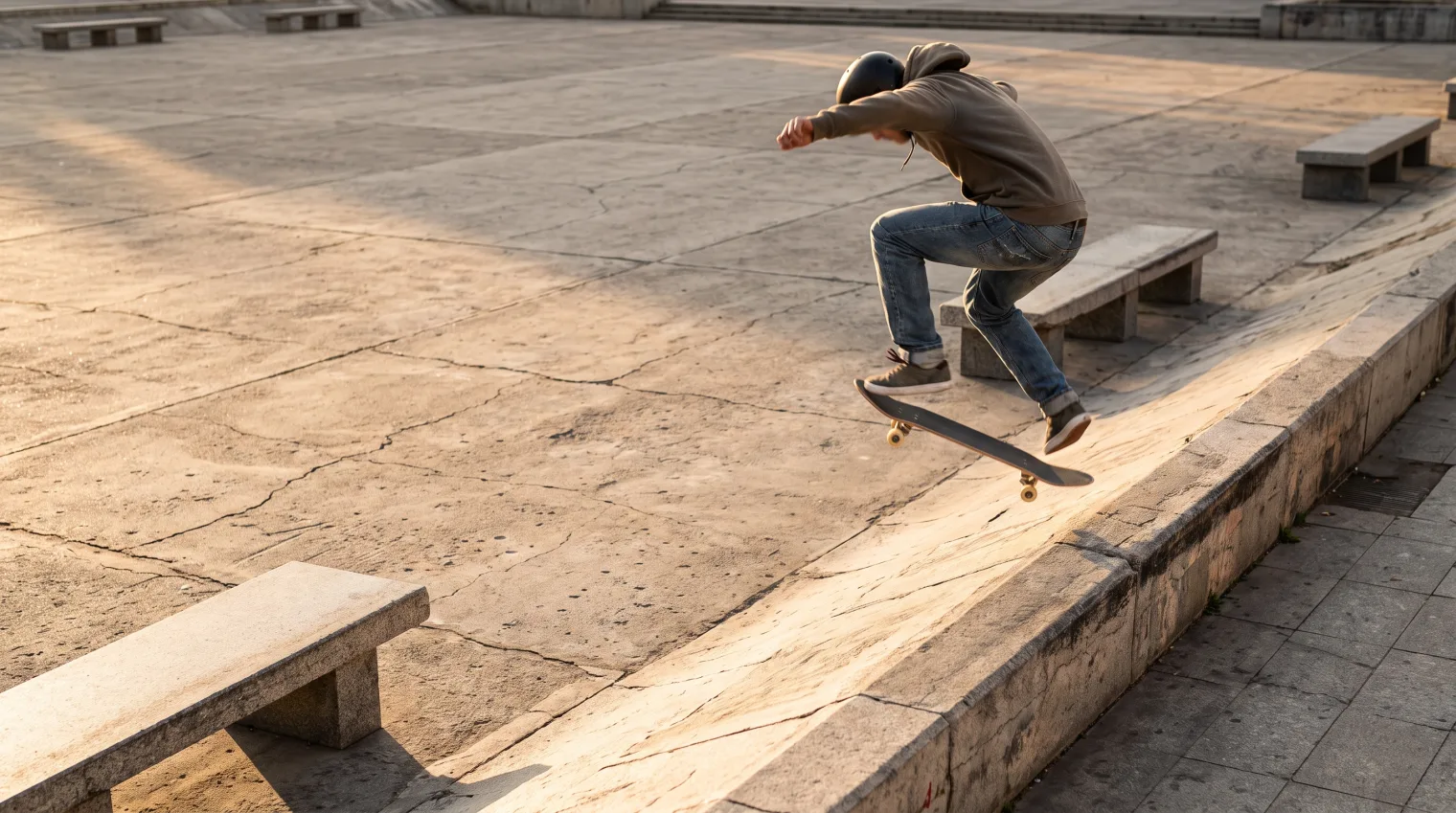
Once you have a consistent ollie and kickflip, the biggest mistake is picking your next trick off a video you watched last night instead of off what your current tricks actually unlock. Onbolts' prerequisite data shows a clear structure at the intermediate level: kickflip and pop shove-it both feed into varial kickflip and tre flip, 50-50 grind feeds into 5-0 grind and nosegrind, and heelflip feeds into varial heelflip. This post lays out that structure so you stop guessing.
The Problem With Random Intermediate Learning
Beginner progression is fairly forgiving. Most beginner tricks share the ollie as a common base, so almost any order works reasonably well. Intermediate progression is less forgiving. Tricks start requiring combinations of two prior tricks, not just one, and the mechanical gap between "landed once" and "consistent" widens.
Onbolts' data shows this clearly. Tre flip requires both pop shove-it and kickflip, not either one alone. If you try tre flip with a shaky pop shove-it, you will not be able to tell whether a failed attempt is a rotation problem or a flick problem. Skaters who jump straight to trending tricks without checking what actually feeds them tend to plateau hard around this stage.
Map Your Current Tricks to What They Unlock
Instead of asking "what trick should I learn next," ask "what does what I already have unlock." Here is that mapping based on Onbolts' prerequisite data for the intermediate tier.
If you have kickflip and pop shove-it (both intermediate-adjacent skills):
- Varial kickflip - intermediate, 2 to 6 months. Combines the shove-it rotation with the kickflip flick.
- Tre flip - advanced, 6 to 18 months. The 360 shove-it plus kickflip combination. Long timeline, and it is worth treating varial kickflip as a checkpoint on the way there rather than attempting it cold.
If you have heelflip:
- Varial heelflip - intermediate, 2 to 5 months. Requires heelflip plus frontside shove-it per Onbolts' data, so frontside shove-it (a beginner-adjacent rotation trick) is worth locking in first if you have not already.
If you have kickflip and frontside shove-it:
- Hardflip - advanced, 4 to 12 months. One of the longer timelines in Onbolts' database, requiring both kickflip and frontside shove-it as prerequisites. This is a trick to plan for, not rush into.
If you have 50-50 grind:
- 5-0 grind - intermediate, 2 to 6 weeks. Balancing on the back trucks only instead of both.
- Nosegrind - intermediate, 3 to 8 weeks. Balancing on the front trucks. Both are direct extensions of 50-50 grind balance, so if 50-50 feels solid, these two are the highest-leverage next step in the grinds category.
If you have nosegrind:
- Crooked grind - advanced. Requires nosegrind directly, and itself unlocks overcrook grind further out.
If you have boardslide and noseslide:
- Lipslide - intermediate, requires both ollie and boardslide per Onbolts' data.
- Bluntslide - advanced, 3 to 8 months, requiring both boardslide and noseslide. A longer-range goal once both slide fundamentals are consistent.
Where Boardslide and Noseslide Lead
Slide tricks form their own intermediate cluster, separate from both the flip-trick and grind branches above. Once boardslide and noseslide are both consistent, Onbolts' data shows they combine into bluntslide (advanced, 3 to 8 months), one of the longer intermediate-to-advanced jumps in the database. Boardslide alone, without noseslide, still opens lipslide, which additionally requires the ollie, so lipslide is realistically available slightly earlier than bluntslide if you have boardslide down but noseslide is still developing.
This is a good example of a trick, bluntslide, that looks like a single skill but is actually gated behind two separate slide tricks maturing in parallel. Treat it the same way you would treat tre flip or hardflip: work both prerequisite tricks to consistent before expecting real progress on the combination.
Why Heelflip and Kickflip Split Into Different Trees
A subtle point that trips people up: kickflip and heelflip do not feed the same intermediate tricks. Kickflip leads toward varial kickflip, tre flip, and hardflip. Heelflip leads toward varial heelflip and, further out, laser flip (advanced, 6 to 18 months, requiring heelflip, frontside 360 shove-it, and varial heelflip together). If your goal is laser flip specifically, heelflip consistency matters more than kickflip consistency, even though both are intermediate tricks with overlapping learning-time ranges.
This is a good example of why picking a target trick first and working backward through Onbolts' skill tree beats grinding tricks in whatever order videos suggest.
The 50-50 Branch Is Underrated
A lot of intermediate skaters focus entirely on flip tricks because they are more visible online, and let their grind progression stall at 50-50. But 50-50 grind unlocks two tricks directly (5-0 grind and nosegrind) at a shorter estimated timeframe than most flip-trick progressions. Nosegrind alone then opens crooked grind, which opens overcrook grind. If you already have a consistent 50-50, this branch is genuinely one of the faster ways to keep expanding your trick count while your flip tricks are still cooking in the background.
Stacking Prerequisites Instead of Chasing One Trick
The tricks with the longest learning-time ranges (tre flip at 6 to 18 months, hardflip at 4 to 12 months, laser flip at 6 to 18 months) all require two or more prior tricks at consistent level, not just landed once. Trying to shortcut straight to these from a shaky kickflip usually means months of frustration with no clear cause. The fix is not more attempts at the target trick, it is going back and pushing the prerequisite trick from "landed once" to "consistent" on Onbolts' 5-level scale first.
How to Tell if You Are Actually Plateauing or Just Impatient
A real plateau looks like this: you have logged real reps, weeks of them, on the same trick attempt and the failure mode has not changed. An impatience problem looks different: you have only put in a handful of sessions on a prerequisite trick and are already frustrated that the combination trick is not landing. Onbolts' learning-time ranges exist to help you tell the difference. If you are three weeks into a trick with a 2 to 6 month range, you are not plateauing, you are early.
The more useful signal is whether your failure mode is changing. If your tre flip attempts three weeks ago were flipping under-rotated and your attempts today are flipping under-rotated in the same way, that repetition is worth examining, maybe your pop shove-it rotation itself needs more isolated reps, separate from the combination attempt. If the failure mode is shifting (landing closer, catching more of the rotation, missing by a smaller margin) you are progressing normally even if it does not feel like it session to session.
Splitting Your Practice Across Branches Without Losing Focus
By the intermediate stage, most skaters are working toward more than one goal trick at a time, a flip trick, a grind, maybe a slide trick, all in progress simultaneously. That is normal and often faster overall than a strictly sequential approach, since Onbolts' data shows these branches (flip tricks, grinds, slides) do not share prerequisites with each other beyond the ollie itself.
The risk is spreading too thin. If you are splitting attention across four separate combination tricks, each requiring two or three prerequisites of their own, none of them gets enough dedicated reps to actually progress. A workable structure: pick one primary goal trick per training block, a few weeks to a couple of months, and use it to decide which prerequisite tricks get the bulk of your reps. Keep the other branches ticking over with occasional practice rather than treating everything as equally urgent.
A Practical Intermediate Checklist
- Get kickflip and pop shove-it to consistent, not just landed once, before attempting varial kickflip.
- Get 50-50 grind to consistent before splitting into 5-0 grind and nosegrind, they train balance in opposite directions and both benefit from a solid base.
- If your goal is a spin-flip trick like tre flip or laser flip, treat the two prerequisite tricks as a package, not a single gate. Consistency on only one of them still leaves a gap.
- Use the progress tracker to check your actual status honestly rather than by memory. It is common to overestimate how consistent a trick really is.
Where to Look Next
The skill tree shows this entire intermediate layer visually, including cross-stance connections for fakie, nollie, and switch variants once you are ready to mirror your regular-stance tricks. If you have not locked down your ollie-based fundamentals yet, start with the beginner order guide before working through this one. And to browse every trick by difficulty and category, the full trick list is the fastest way to scan what is available at your level right now.
Frequently asked
- What should I learn after kickflip and pop shove-it?
- Onbolts' prerequisite data shows both feed directly into varial kickflip (intermediate, 2 to 6 months) and, further out, tre flip (advanced, 6 to 18 months). Get both source tricks to consistent, not just landed once, before attempting either combination trick.
- What comes after 50-50 grind?
- 50-50 grind unlocks 5-0 grind (intermediate, 2 to 6 weeks) and nosegrind (intermediate, 3 to 8 weeks) directly in Onbolts' data. Nosegrind then unlocks crooked grind (advanced, 2 to 5 months), so the grind branch keeps extending from a solid 50-50.
- Do kickflip and heelflip lead to the same next tricks?
- No. Kickflip leads toward varial kickflip, tre flip, and hardflip in Onbolts' data. Heelflip leads toward varial heelflip and, further out, laser flip. If your goal trick is laser flip specifically, heelflip and varial heelflip consistency matter more than kickflip.
- What does hardflip actually require?
- Onbolts' data lists hardflip (advanced, 4 to 12 months) as requiring both kickflip and frontside shove-it. Both need to be consistent, not just landed, since hardflip is combining the flip mechanic from kickflip with the rotation mechanic from frontside shove-it.
- Why does tre flip take so much longer than kickflip?
- Onbolts' data puts kickflip at 1 to 6 months and tre flip at 6 to 18 months. Tre flip requires both pop shove-it and kickflip together, combining a full board rotation with a full flip rotation in one pop. That compounding of two separate rotations, not just one added trick, is why the timeline roughly triples.
- Is it worth working on grinds and flip tricks at the same time?
- Yes. They are separate branches in Onbolts' data (50-50 grind toward 5-0 grind and nosegrind versus kickflip toward varial kickflip and tre flip), so progress on one does not depend on the other. Running both in parallel is a practical way to keep expanding your trick count while longer flip-trick timelines play out.