blog-post // Jul 23, 2026
Pop Shove-It First: Why This Trick Unlocks More Than You Think
The pop shove-it lands in 1-3 weeks per Onbolts' data, but it's a quiet prerequisite behind varial kickflip and the tre flip. Worth prioritizing.
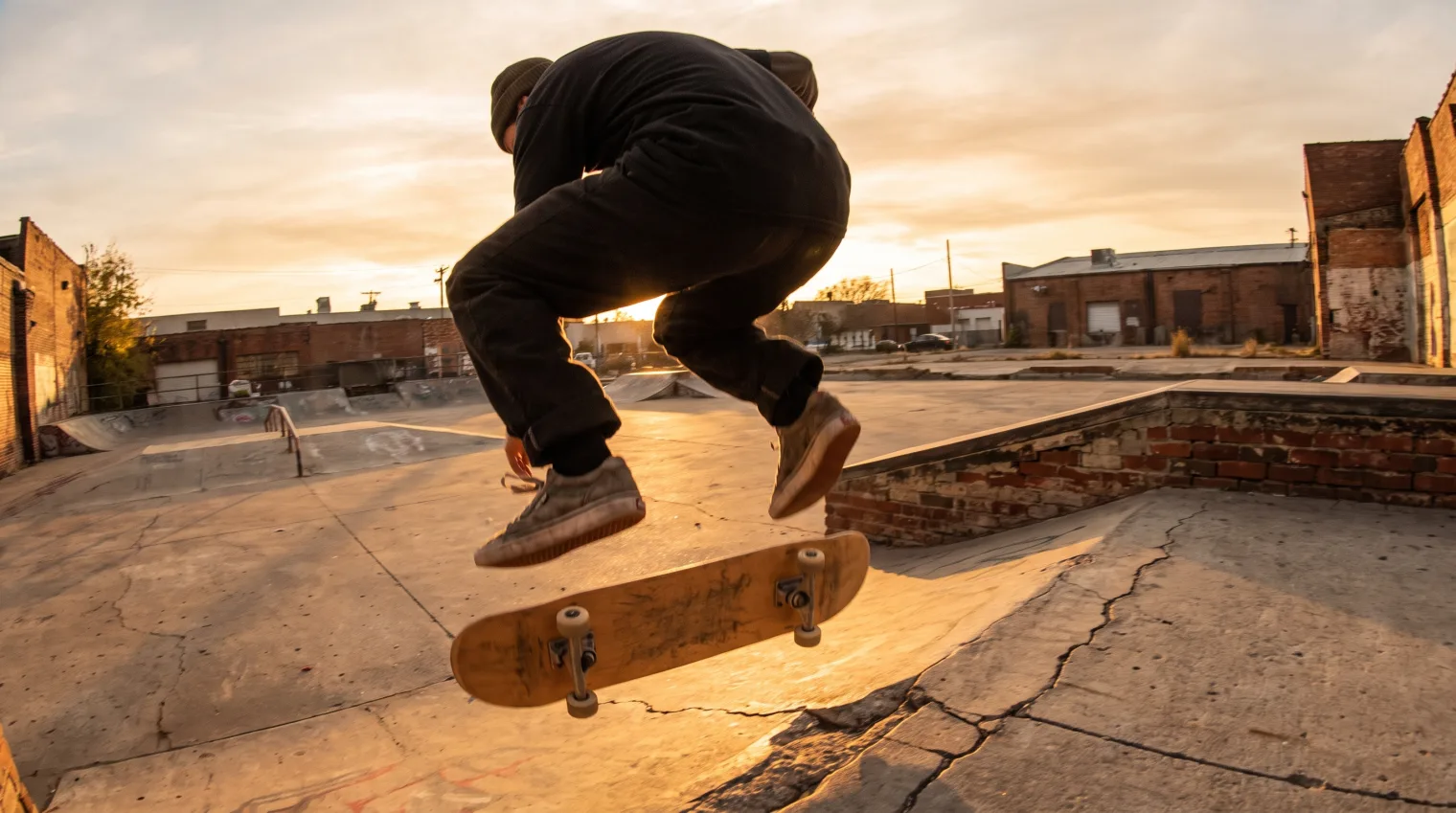
The pop shove-it lands in 1 to 3 weeks according to Onbolts' learning data, the fastest beginner trick after the ollie itself, but it's also a hard prerequisite for both the varial kickflip and the tre flip. Learning it early removes a bottleneck from two separate advanced tricks down the line. If you've got a solid ollie and you're deciding what to learn next, this is one of the highest-leverage choices on the tree.
What the trick actually is
A pop shove-it rotates the board 180 degrees while it's airborne, using a scooping motion with your back foot rather than a straight-down pop like an ollie. Your front foot mostly guides and catches rather than driving the trick. The board should leave the ground, spin a clean half-rotation, and land flat under your feet in roughly the same spot you popped it.
The only prerequisite on the Onbolts skill tree is the ollie, and that requirement is really about pop consistency, not the ollie itself. You need your back foot to be reliable enough that adding a scoop to it doesn't throw off your balance.
Why it's worth learning before you'd naturally get to it
A lot of beginner skaters skip straight from ollie to kickflip because kickflip is the more talked-about trick. That's a reasonable instinct, but it means the pop shove-it often gets learned later, sometimes months later, purely as a prerequisite check for the tre flip once someone's already deep into flip tricks.
Learning it early instead has a real advantage: it's fast (1 to 3 weeks on average) and it teaches a rotational scoop motion that shows up again in two separate advanced tricks. Getting it out of the way while it's still cheap to learn means one less thing standing between you and both the varial kickflip and the tre flip later.
There's also a confidence argument here that's easy to underrate. Coming off the ollie, a lot of beginners haven't landed a second trick yet and start to wonder if the first one was a fluke. Because the pop shove-it trends so fast in the data, it's often the trick that proves the ollie wasn't a one-off, which matters more for morale than it might seem on paper.
The two tricks it unlocks
On the Onbolts skill tree, the pop shove-it is a hard prerequisite for:
- Varial kickflip, which also requires kickflip. It combines the shove-it's rotation with a kickflip's flip.
- Tre flip, which also requires kickflip. This is the same shove-it rotation combined with a flip, executed in a single motion, and it's one of the longer timelines on the whole tree at 6 to 18 months.
Notice the pattern: both of these later tricks pair pop shove-it with kickflip. If you're planning ahead at all, having both of those individually consistent before you attempt either combination trick is the single best thing you can do to shorten their timelines.
Common mistakes that slow it down
Scooping too hard. New skaters often overcorrect once they realize the trick needs more than a straight-down pop, and end up scooping so aggressively the board spins past flat and they can't catch it. The scoop should be a controlled flick with your back foot's heel, not a stomp.
Looking down instead of tracking the board. Your instinct will be to look at your feet as the board spins. Keep your eyes up and slightly ahead, tracking the board's rotation, so your feet know where to go rather than chasing blind.
Front foot doing too much. The pop shove-it is a back-foot trick. If your front foot is trying to help drive the rotation, you'll usually get an uneven spin or the board will kick out sideways instead of rotating cleanly.
Standing too upright through the pop. A stiff, straight-legged stance makes it harder to absorb the catch once the board comes back around. Keep a slight bend in your knees through the whole motion, the same way you would on an ollie, so your legs can adjust to wherever the board actually lands rather than where you expected it to.
A simple progression drill
If you're stuck, break it into stages rather than attempting the full trick every time:
- Static scoop practice. Standing still, practice the back-foot scoop motion without popping, just to feel the rotation.
- Rolling shuvits (no pop). Try the ground-level version first, where the board rotates without leaving the ground, to isolate the scoop from the pop.
- Add the pop. Once the scoop feels automatic, add your ollie pop back in and let the two motions combine.
This staged approach tends to be faster than drilling the full pop shove-it from day one, especially for riders who are still building general board control.
Why the fast timeline doesn't mean it's trivial
It's worth being clear that 1 to 3 weeks is still real practice time, not an afternoon. Riders coming straight off the ollie sometimes expect the pop shove-it to click on the first session because it looks simple on video. The scoop-and-catch coordination is genuinely a new skill, even if it's a faster one to build than a flip trick. Treat it with the same patience you gave the ollie, just expect the payoff sooner.
Rolling attempts versus standing still
Most riders start practicing pop shove-its from a dead stop, which makes sense while you're isolating the scoop motion for the first time. But a rolling pop shove-it is genuinely a different trick to feel out, since your body already has forward momentum that the scoop has to work around rather than create from nothing. Once the stationary version feels reliable, spend a session specifically on rolling attempts at a slow, comfortable speed before assuming the trick is fully learned. A lot of riders discover their stationary shove-it doesn't transfer cleanly to rolling until they've put in dedicated reps at speed.
How the pop shove-it compares to the 360 shove-it
Once a regular pop shove-it feels automatic, some riders get curious about the 360 shove-it, which rotates the board a full 360 degrees instead of 180. It's tempting to think of the 360 version as just "more rotation," but the scoop mechanics change meaningfully at that speed, and the extra rotation is genuinely a separate skill rather than a simple extension. If your goal is specifically to unlock the varial kickflip or tre flip, you don't need to detour through the 360 shove-it at all. The 180-degree version is what those two combination tricks are actually built on.
What a good pop shove-it looks like from the side
If you're filming to check your form, a clean pop shove-it should show the board leaving the ground close to flat, rotating smoothly through the full 180 degrees without wobbling nose-to-tail, and landing back under your feet roughly where it took off. Wobble along the long axis of the board (rocking nose-up or tail-up mid-spin) usually means your front and back foot are fighting each other instead of working together, with the back foot scooping while the front foot is still pressing down. Watching a few clips side by side, your attempts against a clean reference clip, makes this kind of subtle timing issue much easier to spot than trying to feel it in the moment.
Track it honestly on the 5-level scale
Because the pop shove-it lands relatively fast for most riders, it's tempting to call it "done" after the first successful attempt. Onbolts' 5-level scale (learning, landed once, occasional, consistent, mastered) exists to keep that distinction clear. If you're planning to use it as a stepping stone to the varial kickflip or tre flip, aim for "consistent" before you start layering a flip on top, since an inconsistent shove-it makes an already-hard combination trick much harder to diagnose when it goes wrong.
A quick note on terminology before you go looking for tutorials: you'll see this trick called "pop shove-it," "pop shuvit," and occasionally just "shove-it" (with the pop implied) across different videos and forums. They all refer to the same trick as long as the board is leaving the ground. If a tutorial title just says "shove-it" with no other context, check the video itself to confirm it's the popped, airborne version rather than the ground-level rolling shuvit, since the two are taught with different cues.
Log your status on the progress page as you go, and once it's solid, the skill tree will show you exactly which combination tricks just opened up. For tutorials that break down the scoop motion specifically, the video library has breakdowns worth watching before your next session, and the full tricks list shows where the pop shove-it sits relative to everything else on flatground.
Frequently asked
- How long does it take to learn a pop shove-it?
- Onbolts' learning data puts the pop shove-it at 1 to 3 weeks, the shortest window of any beginner trick after the ollie itself. It only requires the ollie as a prerequisite, and the scoop motion tends to click fast once your pop is consistent.
- What's the difference between a shove-it and a pop shove-it?
- A regular shove-it (sometimes called a shuvit) rotates the board 180 degrees along the ground without leaving it, using a scooping motion with your back foot while staying low. A pop shove-it adds an ollie-style pop underneath that same rotation, so the whole board leaves the ground while it spins. The pop version is the one that shows up as a skill-tree node and unlocks other tricks.
- Why does the pop shove-it matter for later tricks?
- It's a hard prerequisite for both the varial kickflip and the tre flip on the Onbolts skill tree. Both of those tricks combine a shove-it style rotation with a flip, so the scoop mechanic you build here transfers directly into two separate advanced tricks later on.
- Why does my board flip upside down (over-rotate) instead of landing flat?
- This usually means your scoop is too aggressive relative to your pop. The board needs to complete a clean 180-degree rotation and land flat under your feet, not flip end over end. Soften the scoop and focus on catching the board the moment it's flat, rather than continuing to push it after it starts rotating.
- Should I learn pop shove-it before kickflip?
- Both only require the ollie, so there's no hard rule, but pop shove-it is worth prioritizing early because it's faster to learn (1-3 weeks versus 1-6 months for kickflip) and because you'll need it anyway before you can attempt the tre flip or varial kickflip. Getting it out of the way early removes a prerequisite from your later path.
- My board spins but I can't catch it in time. What's wrong?
- Your back foot's scoop is probably rotating the board faster than your feet are ready to react to. Slow the scoop down slightly and keep your eyes on the board through the full 180 degrees rather than looking down at your feet, which is a common instinct that actually slows your reaction time.