blog-post // Jul 25, 2026
The Right Order to Learn Beginner Skateboard Tricks (And Why It Matters)
Trick order is not about difficulty, it is what unlocks what next. The beginner sequence, based on Onbolts' actual prerequisite and learning-time data.
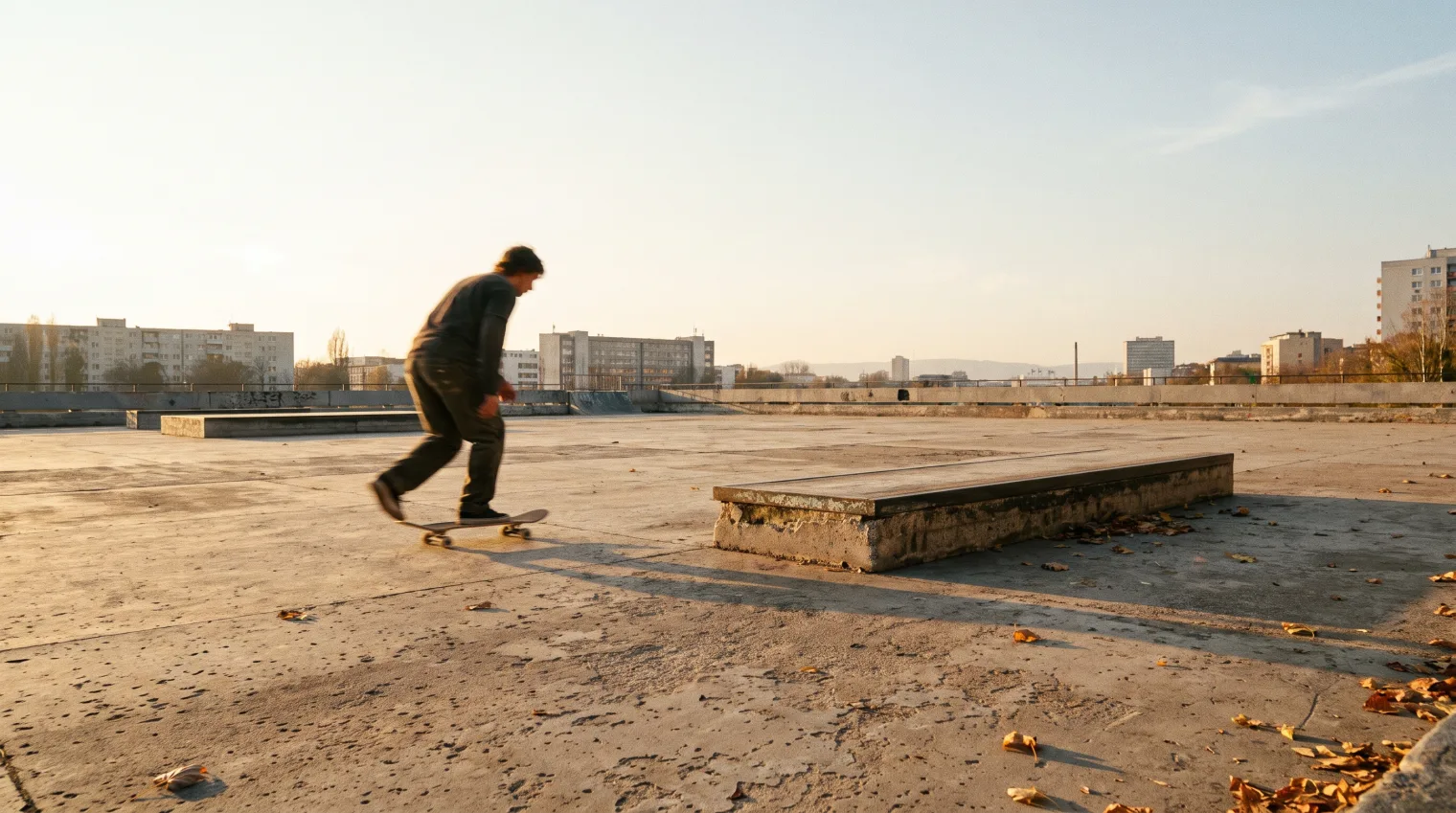
The right order for beginner skateboard tricks is not "easiest first," it is "whatever unlocks the most later, first." Onbolts' skill tree data shows the ollie feeding into nine or more other tricks directly, which is why it comes before almost everything else regardless of how hard any individual trick looks. This post explains the actual dependency logic and gives a concrete order to follow.
Order Matters More Than It Looks Like It Should
New skaters often assume trick order is just personal preference: learn what looks fun, skip what looks boring. That works fine for tricks that stand alone. It breaks down the moment you hit a trick that structurally depends on another one.
Onbolts' prerequisite data is explicit about this. Kickflip requires the ollie. 5-0 grind and nosegrind require 50-50 grind. Varial kickflip requires both pop shove-it and kickflip. These are not soft suggestions, they are mechanical dependencies: you cannot flick a board mid-air consistently if you cannot pop it into the air consistently first.
A Quick Vocabulary Check: Prerequisite vs. Next
Onbolts' skill tree uses two different kinds of connections between tricks, and mixing them up leads to bad planning. A prerequisite is a hard requirement: you need that trick's mechanics in place before the next one is realistically learnable, like ollie before kickflip. A next suggestion is softer: a commonly recommended trick to try afterward, based on what tends to build well, but without a strict mechanical gate behind it. When this post talks about "order," it means prerequisites specifically, since those are the connections that actually block progress if skipped.
Why "Easiest First" Is the Wrong Heuristic
If you sort Onbolts' beginner tricks by how intimidating they look, you might rank manual or pop shove-it below drop in or kickturn, because rolling tricks feel less scary than a flip. But difficulty rating and prerequisite position are different things. Drop in and kickturn are beginner-level transition tricks that do not feed into flatground progression at all in Onbolts' data, they open their own separate branch (axle stall, rock to fakie, and eventually vert tricks like invert). Meanwhile the ollie, also beginner-level, is the single most connected trick in the entire database.
The better heuristic: learn the tricks that unlock the most other tricks first, not the tricks that look easiest.
The Actual Order, Based on Prerequisite Data
1. Rolling fundamentals. Push, turn, stop, ride switch stance a little. Not tracked as a named trick, but every trick below assumes it.
2. Ollie. Beginner, 1 to 4 weeks. The highest-leverage trick in the beginner tier. It directly unlocks pop shove-it, frontside 180, backside 180, kickflip, heelflip, 50-50 grind, boardslide, and tailslide, according to Onbolts' prerequisite map.
3. Manual, in parallel. Beginner, 2 to 6 weeks. Onbolts' data shows manual does not require the ollie, so there is no reason to wait. Running it alongside your ollie practice means you are building two unrelated skills at once instead of queuing them.
4. Pop shove-it. Beginner, 1 to 3 weeks, once your ollie is landing. The fastest of the ollie-based tricks and a direct prerequisite for 360 shove-it down the line.
5. Frontside 180 and backside 180. Both beginner, 2 to 5 weeks each. Learn whichever direction feels more natural first; there is no dependency between the two, so neither has to come before the other.
6. 50-50 grind. Beginner, 2 to 6 weeks, requires only the ollie. Different skill category from the flatground tricks above (approach and balance on an obstacle rather than in-air control), so it is worth starting even before your flip tricks are solid.
7. Nose manual. Beginner, 3 to 8 weeks, once manual is consistent. This is the natural extension of step 3 and does not touch the ollie branch at all.
8. Kickflip and heelflip. Both intermediate. Kickflip is 1 to 6 months, heelflip is 1 to 4 months, both requiring the ollie directly. These take the longest of anything on this list, so they should come once your ollie pop is not just landable but reliable under pressure.
What Happens if You Skip Steps
Skipping the ollie to chase kickflip directly is the single most common beginner mistake according to how the prerequisite tree is structured. Kickflip needs the same pop height and landing control as an ollie, plus a flick on top of it. Trying to learn both at once means every failed attempt could be a pop problem, a flick problem, or both, and you cannot isolate which one to fix.
The same logic applies further up the tree. Tre flip, advanced, 6 to 18 months, requires both pop shove-it and kickflip as prerequisites. Skaters who rush into tre flip attempts without a truly consistent kickflip usually end up relearning kickflip mechanics mid-attempt, which wastes far more time than doing it in order would have.
Two Tracks You Can Learn Without Waiting on the Ollie
Not everything routes through the ollie. Onbolts' data shows manual and the transition-trick branch (drop in, kickturn, rock to fakie, axle stall) exist as separate tracks. If you are stuck on your ollie and getting frustrated, switching to manual practice for a session or two is a legitimate way to keep progressing without abandoning the ollie grind entirely.
The transition branch is worth calling out specifically because new skaters often overlook it. Drop in and kickturn do not require the ollie or manual at all, they are their own beginner-level entry point built around riding transitions like mini ramps and bowls. If you have access to a ramp and flatground is not clicking that day, this branch is a completely valid place to spend a session. It leads toward rock to fakie, rock n roll, and eventually axle stall, none of which depend on your flatground progress.
Why Sessions Go Better When You Track More Than One Track
A beginner working only the ollie branch can hit a frustrating stretch where every session feels like the same failed pop over and over. Splitting your practice across two unrelated tracks, ollie plus manual, or ollie plus the transition branch if you have ramp access, means a rough day on one does not have to be a rough session overall. This is not about learning faster in raw hours, it is about sustaining motivation long enough to put in the hours the ollie actually needs.
Surface and Setup Considerations That Affect the Order
The order above assumes reasonably standard conditions: a hard, smooth surface and a board setup that is not fighting you. Two practical factors can shift how you sequence things in real life.
Ledge or rail access. If you do not have regular access to a low ledge or rail, 50-50 grind and boardslide are going to be harder to fit into your practice rhythm than the flatground tricks on this list. In that case, it makes sense to push those two later, even though the prerequisite data treats them as available at the same point as pop shove-it and the 180s, and to prioritize kickflip and heelflip instead since they only need flat ground.
Board size and wheel hardness. A board that is too large or wheels that are too soft make pop-based tricks noticeably harder to learn, independent of your actual skill. If your ollie has stalled for weeks despite consistent practice, it is worth checking whether your setup is working against you before assuming you need more reps. This will not change the order itself, but it can change how long each step in that order takes.
How Long the Whole Sequence Takes
Stacking the ranges from steps 2 through 8 above (accounting for parallel tracks rather than pure addition), a beginner training consistently can expect somewhere around 4 to 9 months to move from zero to a small toolkit that includes ollie, a couple of ollie-based rotation or grind tricks, and one consistent flip trick. This is directly derived from Onbolts' learning-time data, not a guess, though individual pace varies with practice frequency and terrain access.
Track Where You Actually Are
It is easy to feel behind or ahead based on vibes. Onbolts' progress tracker logs each trick against the 5-level scale, learning, landed once, occasional, consistent, mastered, so you can see with actual data whether you are ready to move to the next step in this order or still need reps on the current one.
Keep Going
For a deeper look at what specifically opens up once your ollie is solid, see the companion post on what to learn after ollie. To see every dependency in this post mapped visually, including by regular and switch stance, visit the skill tree. And for the complete trick database with difficulty filters, browse all tricks.
Frequently asked
- What order should beginners learn skateboard tricks in?
- Rolling fundamentals first, then the ollie, since Onbolts' data shows it is a direct prerequisite for pop shove-it, frontside 180, backside 180, kickflip, heelflip, 50-50 grind, boardslide, and tailslide. Manual can run in parallel since it does not require the ollie. Kickflip and heelflip come last in the beginner phase since they take the longest and depend on ollie consistency.
- Is 'easiest trick first' the right way to plan trick order?
- No. Difficulty rating and prerequisite position are different things. The ollie is rated beginner but unlocks more tricks than anything else in Onbolts' database, so it should come first regardless of how it compares in difficulty to other beginner tricks like drop in or kickturn, which sit on a separate transition-trick branch.
- What happens if I try to skip the ollie and go straight for a kickflip?
- It usually backfires. Kickflip needs the same pop and landing control as an ollie plus a flick on top. Without a consistent ollie first, you cannot tell if a failed kickflip attempt is a pop problem or a flick problem, which makes troubleshooting far harder and typically adds time rather than saving it.
- Can I learn manual before I can ollie?
- Yes. Onbolts' prerequisite data shows manual does not require the ollie at all. It is a balance-based trick, not a pop-based one, so it is a legitimate track to run in parallel with your ollie practice, especially if you want a change of pace while ollie mechanics are still clicking into place.
- How long does the full beginner sequence take?
- Stacking Onbolts' learning-time ranges for the ollie (1 to 4 weeks), a couple of ollie-based tricks (2 to 6 weeks each), and a first flip trick (1 to 6 months), a beginner training consistently can expect roughly 4 to 9 months to build a small, connected toolkit. Actual pace varies with session frequency and terrain.
- Do beginner tricks all depend on the ollie?
- No. Manual and the transition-trick branch (drop in, kickturn, rock to fakie, axle stall) exist as separate tracks in Onbolts' data that do not route through the ollie. They are good options if you want to keep progressing on a session where your ollie practice is not clicking.