blog-post // Jun 18, 2026
Why Your Kickflip Is Not Landing: The 4 Mistakes That Actually Matter
Kickflip not landing? These 4 real mistakes cover jumping forward, half-flips, angled boards, and inconsistent foot placement with causes and fixes for each.
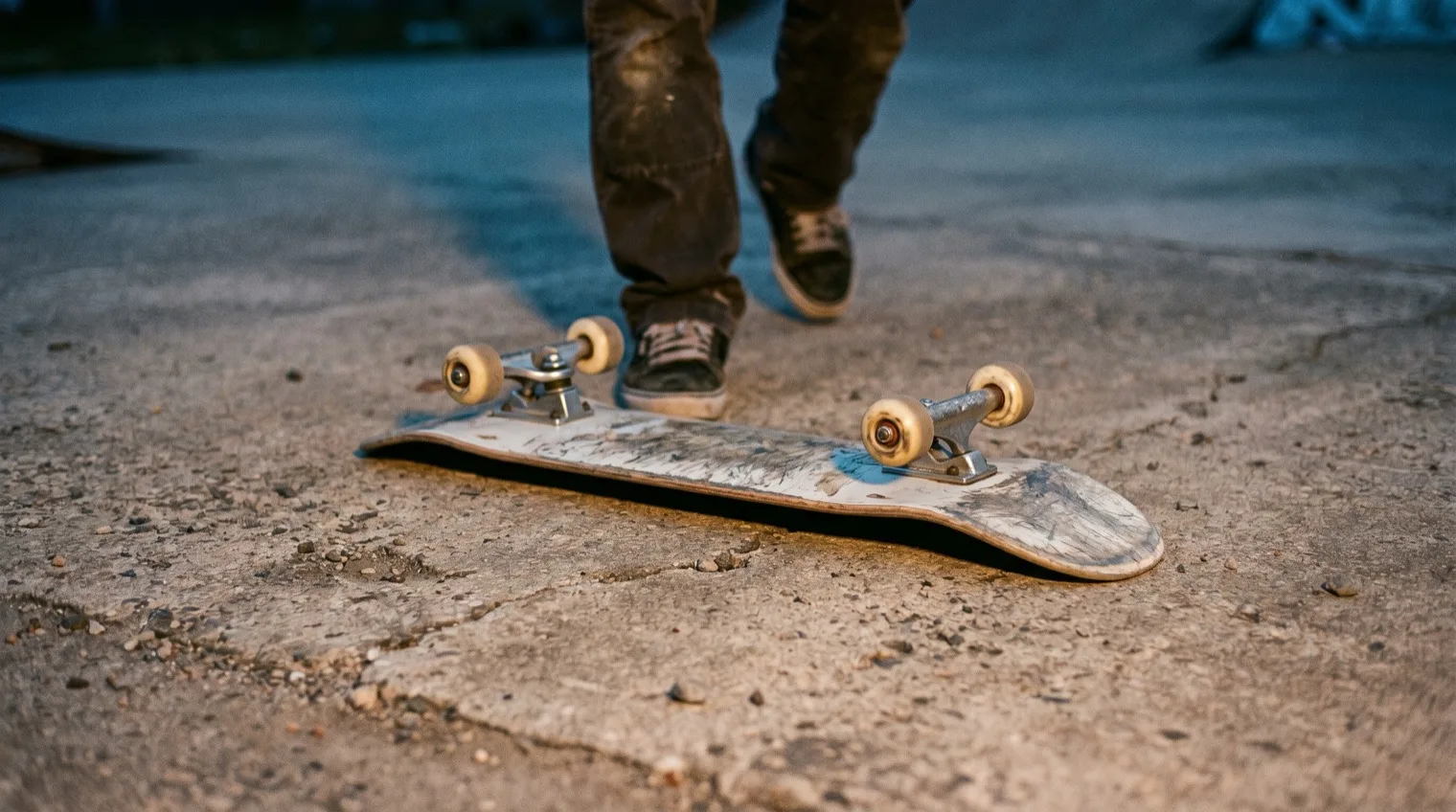
If your kickflip is not landing, the problem is almost always one of four specific mistakes. This article covers each one with its cause and fix, pulled directly from the Onbolts trick database. The kickflip takes most skaters 1 to 6 months to land consistently, and nearly all of that time is spent diagnosing the same repeating errors.
Is Your Ollie Solid Enough to Start Kickflips?
Before going through the kickflip-specific mistakes, check one thing: can you pop a clean, level ollie on flat ground? If your ollie is crooked, low, or inconsistent, those problems carry directly into your kickflip. The kickflip adds a front-foot flick on top of everything the ollie already requires. Fixing your ollie first is not a detour; it is the fastest path to a kickflip.
Mistake 1: Jumping Forward Off the Board
What it looks like: You pop the board but land in front of it or step off to the side. The board seems to stay behind you.
Cause: You are leaning forward into the trick, trying to "help" the flip happen with your body weight.
Fix: Jump straight up. The flip happens entirely because of the flick of your front foot, not because of forward body movement. Think about keeping your shoulders directly above the board through the whole trick. If it helps, practice stationary kickflip attempts next to a wall or fence so you cannot lean forward.
This is the single most common kickflip mistake for beginners. Once you stop fighting it, the rest of the trick often clicks quickly.
Mistake 2: The Board Only Does a Half Flip
What it looks like: The board rotates 180 degrees, maybe less, and does not complete a full kickflip before you try to land.
Cause: The flick is either not strong enough or you are leaving the board too early before the flick is finished.
Fix: Delay the flick slightly. Wait until your foot has slid all the way up to the nose before flicking off the toe-side corner. The extra slide time gives the flick more leverage and more speed. Then commit to catching the board with both feet after it completes the rotation.
A common secondary cause is a weak ankle. Doing ankle mobility exercises and practicing the flick motion off the board can build the strength and snap you need.
Mistake 3: The Board Flips at an Angle
What it looks like: The board spins diagonally, more like a chaotic spin than a clean flip along its axis.
Cause: The flick is going sideways across the width of the board instead of along its length.
Fix: Focus on flicking directly off the toe-side corner of the nose. The direction of the flick should follow the board's long axis, down and forward. If you are unsure where your foot is going, do a few slow-motion rehearsals standing still and watch your foot path. The flick should feel like your toes are peeling off the front corner, not brushing across the nose.
Filming yourself from the front can make this instantly visible. A 30-second clip from a phone propped on a bag reveals more about your flick direction than hours of guessing. Watch specifically for where your foot exits the board: it should leave off the toe-side corner and travel away from the nose, not sweep sideways across it.
How Does Front Foot Position Affect the Flip Direction?
Front foot placement is one of the most common sources of angle problems and inconsistent tricks. For a kickflip, the standard starting position is roughly halfway up the board with the toes hanging slightly off the toe-side edge. The ankle joint needs room to rotate when you flick.
If your foot is too far back toward the middle of the board, the flick loses leverage and the board tends to pop forward without a clean spin. If your foot is too far toward the nose before you pop, you will struggle to level the board during the catch.
When the board flips at an angle, the first thing to check is whether your toes are actually over the toe-side edge at setup. If they are not, the flick motion has nowhere to go but sideways.
Mistake 4: Inconsistent Landings
What it looks like: Sometimes the kickflip works. Sometimes it does not. There is no clear pattern, which makes it hard to diagnose.
Cause: Inconsistent foot placement before each attempt. If your front foot is in a slightly different spot every time, the flick will go in a slightly different direction every time, and the results will be random.
Fix: Before every single attempt, physically look down at your front foot and confirm its position. This sounds slow. It is, at first. But it builds the habit of locking in the same setup before each pop, which is what makes the trick repeatable. Most skaters who are landing kickflips sometimes but not consistently are skipping this step.
The consistent foot placement habit applies to every flip trick you will learn after this one, including heelflip and everything beyond it.
Are You Already Avoiding These Mistakes?
If you have fixed all four mistakes above and the kickflip is still not coming together, run through this checklist:
- Foot position: Front foot should be about halfway up the board with toes hanging slightly over the toe-side edge. Too far back and the flick has no leverage. Too far forward and you lose control of the pop.
- Pop timing: The pop and the flick happen almost simultaneously but the pop leads by a fraction. If you are flicking before you pop, the board stays on the ground.
- Commitment: Catching the board at knee height, both feet on, requires trusting the trick before you can see it complete. Most missed landings happen because the skater pulled their feet back mid-air.
How Many Kickflip Attempts Is Normal?
Most skaters need hundreds of attempts spread over weeks before the kickflip becomes reliable. The range in the Onbolts database is 1 to 6 months for estimated learning time, which accounts for everything from daily practice to a few sessions per week. If you have been trying for a few sessions and not landing it at all, that is completely normal. Focus on one mistake at a time.
What Comes After the Kickflip?
Once you land your first kickflip, the natural next step is getting it consistent and then building the flip foundation. The Onbolts skill tree shows the full path from here. A solid kickflip unlocks heelflip, varial kickflip, fakie kickflip, and eventually tre flip. Each of those builds on the same foot mechanics you are developing right now.
Start tracking your kickflip progress on Onbolts. Log it as learning, landed once, occasional, consistent, or mastered, and the skill tree will show you exactly what opens up next. See the full kickflip breakdown at /tricks/kickflip.
Frequently asked
- Why does my kickflip only do a half flip?
- The board is leaving your foot too early before you get a full flick. Wait until your foot slides to the nose before flicking off the toe-side corner. A stronger, later flick gives the board time to complete a full rotation.
- Why do I keep jumping forward off my skateboard when trying a kickflip?
- You are leaning forward to try to help the flip happen. The flip comes entirely from the flick of your front foot, not from your body moving forward. Focus on jumping straight up and letting the flick do the work.
- Why does my kickflip flip at an angle instead of straight?
- Your flick is going sideways across the board instead of along its length. The flick needs to come off the toe-side corner of the nose, directed down and along the board's axis. Practice the foot motion slowly off the board to build the right muscle pattern.
- How long does it take to land a consistent kickflip?
- Most skaters land their first kickflip within 1 to 6 months of consistent practice. Getting it consistent usually takes longer. The biggest factor is foot placement consistency before every attempt, not raw repetitions.
- Should I learn heelflip at the same time as kickflip?
- Most skaters focus on kickflip first until it is at least occasional, then add heelflip. The flick mechanics are opposite, so learning both at once can cause them to interfere with each other in early stages.
- What should I have solid before trying kickflips?
- You need a consistent ollie first. If your ollie is still crooked or low, the extra front-foot mechanics of a kickflip will compound those problems. Get your ollie consistent on flat ground before adding the flip.