blog-post // Jun 19, 2026
Why Your Ollie Is Crooked, Low, or Inconsistent: Common Fixes
Ollie crooked, low, or inconsistent? These fixes map each symptom to its real cause using real mistakes from the Onbolts trick database, with specific cues.
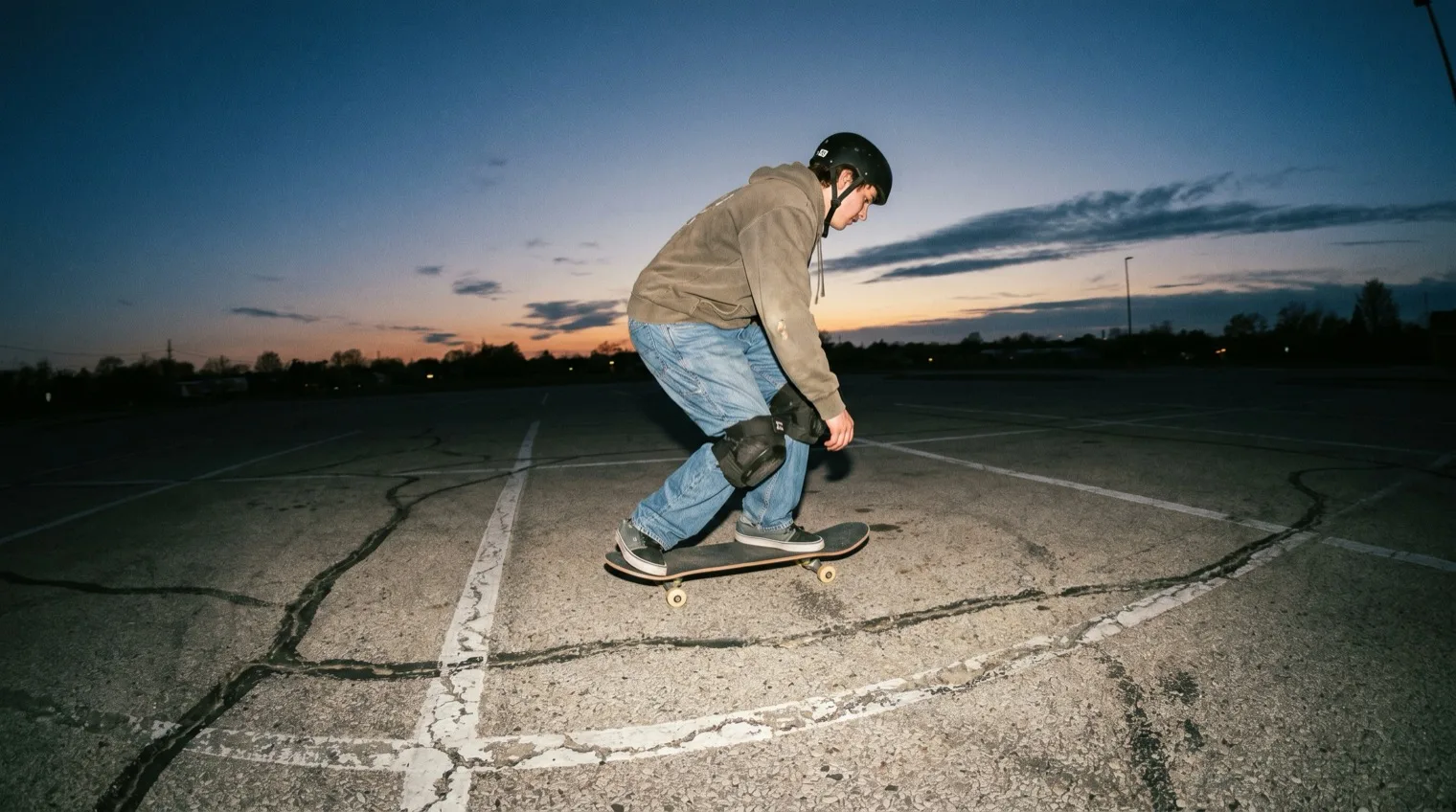
The ollie takes 1 to 4 weeks for most skaters to land and several months to make consistent. Every problem has a specific cause. This article maps the three most common ollie symptoms to the real DB mistakes behind them, so you can stop guessing and fix the right thing.
Why Bother Diagnosing Your Ollie?
The ollie is the foundation of almost every trick that follows. A crooked ollie becomes a crooked kickflip. A low ollie limits your ability to learn tricks over obstacles. Getting your ollie clean now prevents months of fighting the same problems in every trick you learn after it. Use the Onbolts skill tree to see exactly which tricks the ollie unlocks.
Problem 1: Your Ollie Is Crooked
A crooked landing is one of the most common ollie problems. The board rotates slightly in the air and you land at an angle instead of straight.
What causes a crooked ollie?
Two things: your front foot is dragging off-center, or your shoulders are rotating during the trick. Either one puts uneven force on the board and spins it.
How to fix a crooked ollie
Keep your shoulders square to the board throughout the entire motion, from setup through landing. A good practice technique is to look straight down at the board while you ollie and track it with your eyes. If you cannot keep your eyes on it, your shoulders are probably rotating.
Filming yourself from the front is the fastest diagnostic. Watch for shoulder rotation at the moment of the pop, and watch where your front foot drags. Even a small off-center drag adds noticeable rotation.
Practice on carpet or grass first. Without the pressure of landing, you can focus entirely on the foot path and shoulder position.
Problem 2: Your Ollie Is Low
Low ollies frustrate skaters because the instinct is to jump harder. More jump height rarely helps.
What causes a low ollie?
Weak tail snap, or the snap and the jump are not happening at the same time. If you snap the tail and then jump, or jump and then snap, the board barely moves regardless of how high you jump. The pop has to drive the board up, and your legs have to follow it.
How to fix a low ollie
Separate the two problems. First, practice the snap motion alone. Stand on the board and just snap the tail rhythmically without jumping at all. You are building the snap as its own reflex, disconnected from the jump. Once the snap feels natural and quick, add the jump back in. The goal is for both to happen as one motion.
A second thing to check: are you crouching before you pop? A shallow crouch limits how much power you can generate. Get low, then snap and jump together in one explosive movement.
Height also requires the front foot to level the board. If your front foot does not slide forward after the pop, the nose stays down and the board cannot rise. That is covered in the next section.
Problem 3: Your Board Shoots Forward on Landing
This is a specific and diagnosable problem. The board fires out in front of you when you land, or you step off to one side.
What causes the board to shoot forward?
You jumped backward instead of straight up, or your weight shifted back during the pop. Both put the board ahead of your center of gravity on the way down.
How to fix a shooting-forward ollie
Pick a target on the ground and aim to land on the exact spot you took off from. That single cue fixes the backward-jump problem for most skaters. Your brain links the spatial goal to a vertical jump path.
If the board is still shooting forward after you try that, check your back foot. If your heel comes off the tail or you push down with your toes instead of the ball of your foot, it throws the pop direction off-axis.
Problem 4: Landing Only on the Tail
You pop, the nose dips, and you land with most of your weight on the tail. This sometimes breaks tails.
What causes a tail-heavy landing?
Your front foot did not slide far enough forward, or you leaned back at takeoff. The front foot slide is what levels the board in the air. Without it, the nose drops and stays down.
How to fix landing on the tail
Practice the front foot slide on carpet first, with no pop. Set up with your feet in ollie position and just slide your front foot toward the nose screws. Do this until the motion is automatic. The target position is the front foot over the front bolts, not the middle of the board.
Once the slide is in muscle memory, add the pop back in. The front foot motion should happen automatically right after the pop, before you think about it.
Why Does My Ollie Look Different on Camera Than It Feels?
This is extremely common. The ollie feels clean but looks nothing like what you imagine. There are two reasons for this.
First, the muscle memory for a crooked or low ollie is already formed. Your body has done it hundreds of times and it feels normal, even when it is wrong. The feeling of a correct ollie is unfamiliar at first, so skaters often second-guess the right technique because it feels strange.
Second, you cannot see your own shoulders or back foot while skating. Both of those are major sources of crooked and low ollies, and both are completely invisible to you during the trick. A phone propped on a backpack for 10 minutes of filming gives you more useful data than hours of unsighted practice.
If you record yourself and the ollie looks different from what you expected, that is not discouraging. It means you now have accurate information to fix it.
How Do I Stop My Ollie From Being Inconsistent?
Inconsistency in the ollie almost always comes from one of two sources: variable foot placement before the pop, or variable crouch depth.
Foot placement: if your front foot is in a slightly different position each time, the slide will go to a different place each time, and the board will level out differently each time. Before each attempt, look down and physically check that your feet are in the same position.
Crouch depth: a shallow crouch produces a weak pop. A deep crouch produces a strong one. If you crouch inconsistently, the height varies with no clear cause. Pick a crouch depth that gives you a reliable snap and commit to it as a setup routine.
Both of these are pre-trick habits, not mid-trick fixes. The consistency problem is almost always solved in the setup, not the execution.
How to Put It Together
If you are dealing with more than one of these problems at the same time, fix them in this order:
- Low ollie (pop timing) - everything else depends on getting the board off the ground
- Board shoots forward (jump direction) - fix your axis before fixing steering
- Landing on the tail (front foot slide) - add the level-out once you are jumping straight
- Crooked (shoulders and foot path) - the last refinement once height and axis are correct
Film every session if you can. Most ollie problems are invisible when you are doing them and obvious the moment you watch the clip back.
What to Learn After Your Ollie Is Consistent
Once your ollie is consistent on flat ground, you are ready to move to flip tricks. The most direct path is the kickflip. It builds directly on the ollie by adding a front-foot flick. See what to learn next on the Onbolts skill tree or explore the full trick library.
Frequently asked
- Why does my ollie always come out crooked?
- The most common cause is your front foot dragging off-center or your shoulders rotating during the trick. Keep your shoulders square to the board and practice looking straight down at it throughout the motion. Film yourself from the front to see exactly where the rotation starts.
- Why is my ollie so low even though I jump high?
- Height comes from the tail snap, not the jump. If the snap is weak or the timing is off (snapping and jumping at different moments), the board barely leaves the ground regardless of how hard you jump. Practice snapping the tail rhythmically without jumping to build the pop motion alone.
- Why does my board shoot forward when I try to ollie?
- You jumped backward instead of straight up, or your weight shifted back during the pop. The fix is to spot a target on the ground and aim to land on the same spot you took off from. This anchors your jump direction.
- Why do I keep landing on just the tail of my ollie?
- Your front foot did not slide far enough toward the nose, or you leaned back at takeoff. The front foot needs to travel to the nose screws to level the board. Practice the slide motion on carpet first to build the muscle memory without the pressure of landing.
- How long should it take to get a consistent ollie?
- Most skaters land their first ollie within 1 to 4 weeks of practice. Getting it consistent on flat ground takes longer, often several months. A consistent ollie is the foundation for every flip trick, so time spent here is never wasted.
- Do I need a consistent ollie before learning kickflips?
- Yes. A kickflip adds a front-foot flick on top of everything the ollie already requires. If your ollie is crooked or low, those problems compound when you try to flip the board. Get your ollie consistent first, then move to kickflips.